Tag Archive | "Cillian Murphy"

Tags: , , , , , , , , , , , , , , , , , , , , , , , , , , , , , , , ,

HISTORY OF THE COMIC BOOK FILM: Batman Begins Again

Posted on 18 May 2012 by William Gatevackes

In a multi-part series, Comic Book Film Editor William Gatevackes will be tracing the history of comic book movies from the earliest days of the film serials to today’s big blockbusters and beyond. Along with the history lesson, Bill will be covering some of the most prominent comic book films over the years and why they were so special. This time, the Bat-franchise goes back to the beginning with Batman Begins and to the Academy Awards with The Dark Knight.

After the debacle that was Batman & Robin, Warner Brothers was looking to start over at square one. Joel Schumacher thought that was an excellent idea, and said as much in a 1998 interview with Entertainment Weekly:

It’s unlikely the studio will stick with the shticky tone of Batman & Robin. But if it does, count Schumacher out. ”The only way I would do another Batfilm is if we went back to the basics,” says Schumacher. His ideal Batman movie would be based on Miller’s Batman: Year One, a prequel to The Dark Knight Returns, a no-frills account of Batman’s first year of crime fighting. ”It would be nice to take the bigger-is-better concept out of it,” he says, ”and just go pure.”

Schumacher had originally wanted to adapt Frank Miller’s legendary origin redo when he signed on for Batman Forever, but Warners’ executives, wanting a more kid accessible piece, ignored his wishes. They would ignore his wishes again. But this time, it would be with him doing a reboot based on Batman: Year One.  The studio thought that was a good idea, but were looking to Miller and director Darren Aronofsky to handle it.

While this seemed like a comic fans’ dream—Miller co-writing a script with a hot, up-and-coming director in Aronofsky—it was not meant to be. The version of Miller’s script I read had more in common with his Sin City comics than his 1987 storyline that the film was named after. This version found Bruce Wayne living on the streets, working as a mechanic at a garage in the bad part of town, directly across the street from a whorehouse. It was heavy on violence and adult themes, something that would have been perfect for the Martin Scorcese/Robert DeNiro pairing in the 1970s but ill fitting for a 2000 Warner Brothers studio looking for a PG-13 film to bring in the teens.

The studio, after briefly considering a Batman vs. Superman film, would turn to Christopher Nolan next. Nolan gained much acclaim for co-writing and directing the inventive indie drama, Memento. He was still a relatively unproven director—this film would only be his third big studio film he directed—but Warners made an excellent choice. The film Nolan made, Batman Begins, ranks up there with the best comic book films ever made.

Nolan paired with David S. Goyer, a Hollywood screenwriter with comic book writing experience, to create a film that while wasn’t  directly adapted from any one particular comic book, drew pieces from the overall Batman comic book history to create their narrative. The plot involves Christian Bale’s Bruce Wayne’s training to become Gotham City’s protector, eventually saving it from destruction by his former mentor, Ra’s Al Ghul (Liam Neeson).

The entire cast of the film is the best cast any comic book film has had or likely will have. It was chock full of Oscar winners (Morgan Freeman, Michael Caine, and, eventually, Bale), Oscar nominees (Tom Wilkinson, Ken Watanabe, Neeson) and quality actors like Cillian Murphy and Gary Oldman. Oldman, who would eventually get an Oscar nod too, was especially good as the film’s moral center, James Gordon. Playing against type as a decent, honest man, Oldman gives one of his best, if somewhat underrated,performances of his illustrious career.

It seemed like it would be almost impossible for Nolan to top what he did with Batman Begins, but he did it on The Dark Knight with the help of a spectacular addition to the cast—Heath Ledger.

Heath Ledger’s untimely death of an accidental prescription drug overdose has added a mythic quality to his performance as the Joker in The Dark Knight, that his deep immersion in the character scarred his psyche in a manner that led to his overdose (the drugs found in Ledger’s system are commonly used to treat anxiety and insomnia). It feels unseemly even to bring it up, but I do so to make the point that the performance would have been mythic even if Ledger survived.  His Joker is the defining Joker. And I am saying that while having the utmost respect for the work Jack Nicholson and Mark Hamill have done with the character.

The Joker is written in the movie as a force of nature, an agent of chaos. He exists to destroy the fabric of society. He is a cipher—his history is unknown and his motives are unclear.  This is not an easy role to play. It could be the perfect opportunity make it hammy or give a portrayal that was out of place with the film as a whole. Ledger gave a scary, realistic performance that was totally believable. All the posthumous accolades that Ledger received, including becoming the first star from a comic book movie to win an Oscar, are all well deserved.

However, all the accolades that Ledger receives takes away from a great film and the solid performances of the other new additions to the cast—Aaron Eckhart as the tragic figure of Harvey Dent/Two-Face, and Maggie Gyllenhaal replacing Katie Holmes as Rachel Dawes (a vast improvement, I must say).

The Dark Knight set yet another impossible task for the next sequel to try and top it. That task begins in a few weeks when The Dark Knight Rises is released.

This film promises to be the last in the series, introducing Catwoman (Anne Hathaway) and Bane (Tom Hardy) into the mix. It looks like Ra’s Al Ghul will be returning as well, either in a flashback or, well, if you knew the comics, you’ll know of another way he could come back. The plot is timely too, supposedly tying into the disenfranchised poor versus the entitled rich that was the basis for the Occupy Wall Street movement.

Where the franchise goes from here is anyone’s guess. While Nolan is staying on to produce the next phase of the Batman film life cycle, it looks like whatever comes next will be a fresh start.

Next time, we look at a time when everything Marvel touched cinematically did not turn to gold. In fact, movies were made that we never seen at all.

Comments (0)

Tags: , , , , , , ,

Review: INCEPTION

Posted on 16 July 2010 by Rich Drees

The summer movie season is usually the time for big dumb brainless fun and there is nothing wrong with that. But as director Christopher Nolan has reminded us with his two Batman films, the blockbuster doesn’t have to be just that. It can have emotional depth and a smart and layered text. Nolan ramps that up this summer with the brain-twisting brilliance of Inception, which could best be described as the best film adaption of a novel that Philip K. Dick should have written but didn’t.

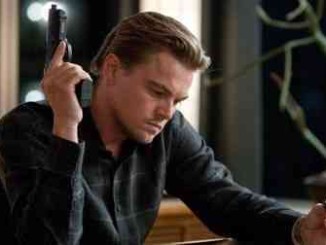
Dom Cobb (Leonardo diCaprio) is what could best be described as an industrial spy. He and his group are hired by powerful and rich businessmen to infiltrate their rivals for key pieces of information. However, they do not do this through computer hacking or even old fashioned breaking and entering. Cobb and his group are known as extractors. They enter their target’s dreams and manipulate the subject in to giving up the desired secret.

Nolan bravely begins the film in the middle of one of these missions and holds back on spelling out exactly what is going on for almost a half-hour. This could conceivably alienate and confuse some, but Nolan doesn’t leave his audience entirely helpless. There is enough information available to follow the action and decode what is happening and Nolan trusts that his audience is smart enough to figure it out. And by engaging their brains to actively follow the onscreen action rather than passively letting it wash over them, Nolan is prepping the audience for the many twists and turns he will be putting the concept through later in the film. A little later, Nolan offers a second reason through Cobb for this mise en scene when the character explains to new recruit Ariadne (Ellen Page) the nature of how one experiences a dream and how you don’t necessarily realize that you are dreaming. Again, a warning to the audience for what is to come.

Cobb and his crew find themselves in a quandary when Saito (Ken Watanabe), a former target of theirs, wishes to hire them for a job of his own. Instead of just extracting information from Robert Fischer Jr. (Cillian Murphy), the son of a recently deceased business rival, they are asked to implant in him the idea of breaking up his father’s company which he has inherited into smaller groups that won’t be as competitive with Saito’s business. Cobb’s associates, lead by Arthur (Joseph Gordon-Levitt), think that it can’t be done. But Cobb is strangely adamant that it can. And as Cobb begins to train newcomer to the group Ariadne, she slowly begins to why he feels it can be done. And that reason could endanger the mission and the group.

Characters interacting with each other in a shared dream is not a new idea in movies. We saw it back in the 1980s with Dreamscape while the Wachowski Brothers’ Matrix trilogy is pretty much built on the concept’s foundation. But Nolan takes the idea and moves in a direction that recalls another film – The Sting. As Cobb and his crew descend in to Fischer’s dreams, they must use a number of tricks and subterfuges layered on top of one another to gain his trust and to be able to implant the suggestion. It’s a complicated confidence game they are running. However, when those carefully laid plans hit an unforeseen snag and start to unravel in the way these things often do, they are forced to think on their feet and improvise solutions. It’s during this segment of the film that many members of Cobb’s group, and the actors who play them, get a moment or two to shine and prove that they are not just dispensable sidekicks.

Interestingly, Nolan takes the hoary old horror movie cliche of a dream-within-a-dream and builds the crux of the movie on it. His dreamscapes follow a certain logic, but never get too random and weird. Characters have the ability to create and move through M. C. Esher-like geometries, but the unreality would alert the target that something is wrong and ruin Cobb’s chances of success. Have you ever been asleep and dreamed of a specific song only to wake right up and hear it playing on a radio? Nolan allows those kinds of influences to play an important impact on the dream landscapes and on the plot.

But the movie isn’t all just tricky characters moving through a complicated, if inspired, plot. DiCaprio’s Cobb is as much a mystery to be solved as is the mission to implant an idea in Fischer’s mind is a task to be accomplished. It moves through some tough places, playing to DiCaprio’s strengths. But it all dovetails nicely with the main plot in an ending that will have audiences debating and discussing for years.

Comments (1)