Tag Archive | "Wes Craven"

Tags: , , , , , , , , , , , , , , , , , , , , ,

HISTORY OF THE COMIC BOOK FILM: Swamp Things

Posted on 10 February 2012 by William Gatevackes

In a multi-part series, Comic Book Film Editor William Gatevackes will be tracing the history of comic book movies from the earliest days of the film serials to today’s big blockbusters and beyond. Along with the history lesson, Bill will be covering some of the most prominent comic book films over the years and why they were so special. This time, the comic book muck monsters, Swamp Thing and Man-Thing, hit the big screen two decades apart.

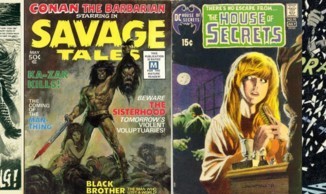
While Man-Thing, who made his debut in Marvel Comics’ Savage Tales #1, cover dated May 1971, came before Swamp Thing, who debuted in DC Comics’ House of Secrets #92 cover dated July 1971, in the comics, the latter would beat the former to movie screens by more than twenty years, and even then Man-Thing would only be released internationally.

The comic book origins of the two are remarkably similar. Both were working on secret formulas in laboratories located in swamps.  Both are attacked by foes looking to gain the formula for themselves. Both are exposed to the chemicals, become grievously injured, and end up coming to rest in the swamp where the formula and mystical forces work to combine the men’s bodies with plant matter, creating a new lifeform.

Due to the close proximity of release dates of their first appearances, it would be easy to write of the similarities as coincidence. However, Swamp Thing’s co-creator, Len Wein, was roommates with Man-Thing’s co-creator, Gerry Conway. Wein even wrote the second Man-Thing story that would have been in Savage Tales #2 if the series wasn’t cancelled.

Whether it was subliminal influence or direct copying, it didn’t matter. Both characters bore more than a passing similarity to a Golden Age character called The Heap (which debuted in 1942) and each character went off into quite different directions after they first appeared—Swamp Thing becoming a sentient being searching for revenge and a cure for his condition, Man-Thing becoming an essentially mindless force of nature wreaking havoc on all evil men who crossed its path.

Swamp Thing had more success in the comic book world, starring in a number of well-received series over the years. The first, written by Wein and drawn by co-creator Bernie Wrightson for the first ten issues, established the revenge/looking for a cure with a horror tinge to it. That series ended in 1976, but it certainly was fresh in the minds of Hollywood filmmakers, who decided to make a film of it in the early 1980s. 

The film, Swamp Thing, was written and directed by horror master Wes Craven, who was then known for The Hills Have Eyes and The Last House on the Left and was two years away from creating another of his seminal works, Nightmare on Elm Street.

The film was a campy action film, lacking much of the horror elements that Craven and the comic book were known for. However, the film was responsible for DC starting up a new Swamp Thing series to capitalize on the film (the series’ first annual adapted the film).This series would be one that would change the landscape of American comics forever.

With the twentieth issue of this second series, a new writer was brought in to take over for series originator Martin Pasko. This writer was British, known primarily for his work on Marvel UK’s Captain Britain series but almost completely otherwise unknown here in the States. The writer’s name was Alan Moore, and he would revolutionize comics in many ways.

Moore is credited with introducing the “grim and gritty” trend in comics, which isn’t truly fair because Pasko’s work on the title was just as grim and just as gritty as Moore’s. But what Moore did was change the way writers (and, by extension, readers) looked at comic book stories. He deconstructed the character of Swamp Thing, revitalized him, and set the bar for every other creator working in comics. He made Swamp Thing a buzz book and made himself into a superstar.

If Moore wasn’t placed on Swamp Thing and given the freedom to do what he saw fit, we probably wouldn’t have had great stories such as Superman: Whatever Happened to the Man of Tomorrow?, Batman: The Killing Joke, and Watchmen. If his writing wasn’t a success, the door wouldn’t have been opened for U.K. writers such as Neil Gaiman and Grant Morrison to gain a foothold in the States. And  Vertigo, DC’s imprint for experimentation and literate comic book writing, would never have come into being.

With all the excitement that Moore was bringing to Swamp Thing, it was only natural that talk would turn to a sequel to Craven’s film. And, in true Hollywood fashion, the producers took a look at what was happening in the comics, ignored all of it, and amped the campy nature of the first film into a full blown comedy with 1989’s Return of the Swamp Thing.

The reason why people don’t remember Swamp Thing being as campy as it was is because it seems as somber as Citizen Kane next to Return of the Swamp Thing. The only major element carried over from the comics was the romance between Swampy and Abigail Arcane, who was played by Heather Locklear. However, Abigail was written in the comics as a well-rounded female character while in the film she is written as having all the emotional weight of a helium balloon. And the romance, which was portrayed in comics with the sensitivity and tact of two soul mates finding each other against all odds, was portrayed in the film as more of a kinky exercise where a plant lover would really get off on having sex with a plant.

As bad as Return of the Swamp Thing was, it in itself is like Citizen Kane to 2005’s Man-Thing film.

This film acts as a blip in the otherwise successful run Marvel has been having since 2000. The fact that the film aired on the SyFy Network (then called SciFi) as a SciFi original gives us some indication as to the quality of the film. While the storyline remains somewhat true to the comic book (the origin is changed as is Man-Thing’s alter ego Ted Sallis, who goes from a scientist to a Native American Shaman), the production values are severely lacking. Marvel chose not to give the film a release in the U.S. because they thought the poor quality of the film would derail the momentum the studio was building with its other properties.  It was released internationally, surely giving foreign countries another reason to view America in a negative light.

While the movie might have killed any possibility of any other Man-Thing films ever being made, there is a Swamp Thing remake in development. Screenwriter Akiva Goldsman (a name that strikes fear and terror in the hearts of comic fans everywhere) is writing the film and director Vincenzo Natali (Splice) has been tapped to direct.

Next up, we go to the jungle and examine the popularity of the “jungle girl” through the trend’s most famous example, Sheena.

Comments (0)

Tags: , , , , , , , , , , , ,

Marvel Studio Chief Talks More Hulk, Post-AVENGERS Slate

Posted on 22 October 2008 by Rich Drees

While comic book movie fans have been excited by Marvel Studios gameplan to cross-pollinate their superhero films over the next few years, culminating in the summer of 2011 with the superhero teamup The Avengers, Marvel has already started to look beyond that big event to what their next wave of films will bring.

In an interview with MTV’s Splash Page Blog, Marvel Studios honcho Kevin Feige stated that the mystical side of the Marvel Cinematic Universe could be up next for exploration with a big screen appearance by master sorcerer Doctor Strange.

I’d say in the next year, year and a half, as we start putting together our film slate for 2012 and 2013, I would not be shocked if we saw Dr. Strange on those lists. I love the idea of taping into the magical realm of the Marvel Universe, which is fairly significant and hasn’t yet seen life on screen. It’s something I’m very, very interested in.

I remember two years ago at Comic Con the cover of the LA Times Calendar Section, read ‘Marvel calls out the B team’ and there was a picture of Iron Man. We don’t look at them as ‘B team.’ Dr. Strange? This is one of the best characters we have. [He represents] this amazing cosmic universe to Marvel that we haven’t played with in films yet and I think could be amazing to play with.

Far be it from us to correct him, but it seems like Feige is forgetting that the good Doctor has already been brought to life once before, in a 1979 TV movie starring Peter Hooten. Intended as a backdoor pilot for a possible series, the TV movie understandably died in the ratings as it aired against the cultural juggernaut miniseries Roots. Since then, the character has gone through various development incarnations with the likes of Bob Gale, Wes Craven and David Goyer working to bring the character to the big screen.

Feige also addressed possible future plans for the Hulk. While this summer’s The Incredible Hulk was a hit for the fledgling studio, there is no immediate Hulk 2 sequel scheduled. But that doesn’t mean audience’s have seen the last of the emerald-hued, muscle-bound Jekyll and Hyde allegory.

The truth is that Hulk has had two films in the past five years, and it’s time to give some of the other guys a turn. But certainly what we are doing is suggesting and cross-pollinating the characters between films, and like reading a comic, I’d like to set that expectation that anything can happen — and anyone can pop up — in anybody else’s story. I would expect that people may see the Hulk again soon before he is again carrying his own film.

So, does the Hulk turn up in May 2010′s Iron Man 2, returning the favor after Iron Man star Robert Downey Jr. made a quick cameo appearance at the end of Incredible Hulk? Is Marvel planning on having the Hulk appear in the Avengers movie? And what do you think of the Hulk possibly becoming a supporting player in other superhero’s films?

Comments (0)