In Remembrance: David Raksin
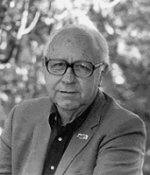 David
Raksin, the film score composer whose theme from the 1944 film noir Laura
became one of the most recorded songs of all time, has passed away on
Monday, August 9, 2004 in Los Angeles, CA. He was 92.
David
Raksin, the film score composer whose theme from the 1944 film noir Laura
became one of the most recorded songs of all time, has passed away on
Monday, August 9, 2004 in Los Angeles, CA. He was 92.
Born on August 4, 1912 in Philadelphia, Pa, Raksin grew up in a musical household. His father was a music shop owner who also composed for and conducted music for silent films. Growing up Raksin studied piano and was taught how to play wind instruments by his father, who had played with the Philadelphia Orchestra as a clarinetist. At age 12, Raksin had his own dance band and while he high school he taught himself composition. He worked himself through the University of Pennsylvania by playing a number of radio orchestras. Following graduation, he moved to New York City, where he worked in radio and on Broadway and arranged music for various record companies.
In 1935 Raksin headed to Hollywood to work Charlie Chaplin on his film Modern Times. Although Chaplin had ideas for the music that he wanted in the film, he lacked the training to write them down. Raksin was hired to transcribe and expand upon Chaplin's themes. He would receive a co-arranger credit for the movie.
Rakisn worked first on the composing staff at Universal Studios and then Columbia Pictures before landing a job at Twentieth Century Fox. Raksin worked on 48 films throughout the 1930s where he never received credit. As was the custom at the time, screen credit was usually reserved for the studio's music department head, who often oversaw teams of composers on individual films. He did receive a shared credit with four other composers for 1939's The Adventures of Sherlock Holmes. Since Raksin had studied with Arnold Schoenberg at the University of Pennsylvania, his music was often considered avant-garde by others in the studio system and so Raksin would often by assigned to lower budgeted horror films like the 1942 werewolf picture The Undying Monster. Some of his early credited work includes the films Dr. Renault’s Secret (1942), Something To Shout About (1943) and Tampico (1944).
Raksin's received his break when he was offered the opportunity to score director Otto Preminger's 1944 film Laura. Studio scuttlebutt said that the film had had a troubled production and Alfred Newman and Bernard Hermann had already passed on working on the project. For the film Raksin wrote a haunting melody which plays repeatedly on the film's soundtrack to emphasize the lingering impact a murdered woman (Gene Tierney) has had on those whose lives intersected with hers. Dana Andrews played the detective investigating the woman's murder who finds himself falling in love portrait of the object of his investigation. Many attribute the power of the score to the fact that Raksin began his work on it the day after his wife had left him. The film was a hit and Johnny Mercer was enlisted to write lyrics for the main theme. The resulting song "Laura" would go on to hit the top spot on the Hit Parade. The song "Laura" would go on to be recorded over 400 times, with Hoagy Charmichael's "Stardust" being recorded more.
Oddly enough, Raksin would not receive any Oscar recognition for his most famous piece. He would receive two Academy Award nominations for Forever Amber in 1947 and for Separate Tables in 1958. Raksin also wrote scores for such films as The Secret Life Of Walter Mitty (1947), Pat And Mike (1952) and Suddenly (1954).
However, for all of Raksin's success, he still encountered some instances of "artistic differences" with the directors and producers he worked with. In 1952, when Raksin first played the theme from The Bad and the Beautiful for the film's director Vincente Minnelli and producer John Houseman, they were less than enthusiastic. However, he found two champions for the music in the form of Betty Comden and Adolph Green, the screenwriters for Singing In The Rain, who convinced Minnelli and Houseman to use the music.
In 1951, Raksin appeared before the House Un-American Activities Committee due to a brief membership in the Communist Party in the early 1930s. Although he supplied the committee 11 names of party members who were already dead or had been named by other witnesses, it was an action Raksin later regretted. In a 1997 interview with the Los Angeles Times, Raksin stated, “What I did was a major sin, but I think I did as well as most human beings would’ve done under torture. It wasn’t an abject capitulation. I told the committee they should leave the Communist Party alone, not to try and crush it. But there I was, a guy with a family to support and a fairly decent career about to go down the drain.”
Raksin also worked in television supplying the themes for Wagon Train, Ben Casey and Medical Center. He served eight terms as the president of the Composers and Lyricists Guild of America from 1962 to 1970. He taught composition for film at the University of Southern California and has composed several concert pieces which have been performed by the New York Philharmonic, the Boston Pops and the London Symphony.