|
In Remembrance: Ingmar Bergman
Often credited with helping to open up the American market for foreign films in the 1950s, Bergman was a three-time best foreign language film Academy Award winner for The Virgin Spring (1960), Through A Glass Darkly (1961) and Fanny And Alexander (1983). He was also awarded the Irving J. Thalberg Award from the Academy in 1970.
Death was a frequent subject on which his films meditated, most famously in The Seventh Seal (1957). In the film, Max Von Sydow stars as a medieval knight who travels across the plague-stricken countryside before playing chess with the embodiment of Death. In Wild Strawberries (1957), an aging doctor (Victor Sjostrom) reflects on his life and finally comes to terms with his impeding death. The film is considered by many critics to be Bergman’s greatest work and would serve as an inspiration for director Bob Rafelson’s Five Easy Pieces (1970).
Born on July 14, 1918 in Uppsala, Sweden, Bergman endured a strict upbringing at the hands of his Lutheran minister father who often punished the future director by locking him in a cupboard. Bergman first became interested in a career in film when he visited a Swedish film studio at age 10. While studying art and literature at Stockholm University, he became active acting and directing in the school’s theatrical productions. Bergman would continue to be involved in theatre for much of his career.
In 1941, Bergman was hired as a script doctor by the studio Svensk Filmindustri. He received his first full script assignment in 1944 for the film Hets, which was released as Torment in the United States. Based on his work on the script, Bergman was allowed to write and direct Kris (Crisis) in 1946.
Bergman first came to international prominence in 1955 with the romantic comedy Smiles Of A Summer Night. But despite the acclaim for his more introspective work, Bergman also made a small number of comedies as well as an adaptation of Mozart’s opera The Magic Flute.
Working out of Stockholm’s Studio House studios, Bergman gathered a stock company of actors with whom he worked with in numerous films repeatedly casting Von Sydow, Bergman, Liv Ullmann, Bibi Andersson and others in his films.
Bergman was not afraid to turn the camera on himself, using film to examine his own life. The director’s Silence of God Trilogy – Through A Glass Darkly, Winter Light (1962), and The Silence (1963) – finds the director wrestling with his faith and the idea that God was seeming to refuse to intercede in the world’s suffering. In Fanny And Alexander (1982), the director seems to be exploring his feelings towards his disciplinarian father. In Bergman’s screenplay Faithless (2001), a film director attempting to come to grips with what an affair has done to his life. Ullmann would direct the film. Bergman’s final film, Saraband (2005), dealt with the death of an estranged son, another story with autobiographical origins.
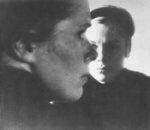
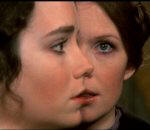
In addition to being the powerful writer of most of his films, Bergman also had an eye for picture composition that was unparalleled. Images like Von Sydow’s chess game with Death and the juxtaposed faces in Persona (1967) are part of the cultural lexicon. In 1969’s The Passion Of Anna, Bergman filmed a scene lit only by a single candle.
Writer/director Woody Allen was a vocal admirer of Bergman’s films and would simultaneously parody and give homage to the director’s work with his 1975 comedy Love And Death. Many shots would ape well known Bergman compositions and the film ends with Allen and Death dancing into the distant , sending-up the ending of The Seventh Seal. So indelible was Seventh Seal’s Death that he would be spoofed in such films as The Last Action Hero (1993) and Bill And Ted’s Bogus Journey (1991) in which the titular characters best Death in a series of games including Clue, Battleship and Twister. |
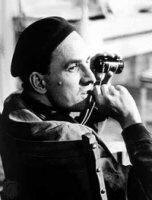 Ingmar Bergman, the Swedish director whose cinematic explorations of
the existential nature of human existence lead him to be considered
to be one of the greatest artists working in film, has passed away
on July 30, 2007 on Faro, a small island off the Swedish coast where
the director had lived for many years. He was 89.
Ingmar Bergman, the Swedish director whose cinematic explorations of
the existential nature of human existence lead him to be considered
to be one of the greatest artists working in film, has passed away
on July 30, 2007 on Faro, a small island off the Swedish coast where
the director had lived for many years. He was 89.