In Remembrance: Wah Ming Chang
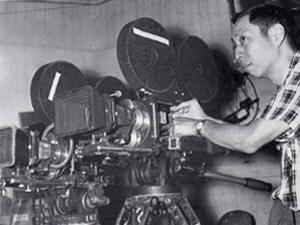 Wah Ming Chan, an
Academy Award-winning animator and designer, died in Carmel, CA on Monday
December 22nd at the age of 86.
Wah Ming Chan, an
Academy Award-winning animator and designer, died in Carmel, CA on Monday
December 22nd at the age of 86.
Chang worked on three Walt Disney films and as a Hollywood costume designer and sculptor on various others but it is best known for winning an Oscar for his work on The Time Machine (1960). He was an artist for more than seven decades.
Born in Honolulu August 2, 1917, Chang and his family moved to San Francisco in 1919. In San Francisco, his parents managed the Ho Ho Tea Room, a hangout for bohemian artists. Blanding Sloan, a well-known artist and a regular customer, took an interest in the 6-year-old Chang after he discovered him sketching portraits. Sloan introduced Chang to the art of puppet making, and this talent had a lasting impression on Chang's life. Shortly after his mother died and his father left for Europe, Chang was taken in by Sloan and his wife to their Hollywood home and started creating film sets for the Hollywood Bowl at the age of 16.
In 1939, after moving back to Hollywood, 21-year-old Chang began working for Anaheim-based Disney. At that time he was the youngest member of Disney's Effects and Model Department. Chang developed polio and lost the use of his legs shortly after starting at Disney but managed to recover after a 21-day hospitalization. During his stint with Disney, Chang created wooden models of Pinocchio (1940) and Bambi (1942) so that Disney animators could study body movements.
Chang worked with celebrated puppet animator George Pal in the early 40's before starting his own studio in 1945 producing educational films, including the animated anti-atom bomb film The Way of Peace. However, work was slow and the studio closed.
In 1956 Chang joined Gene Warren and Tim Barr to start an effects company called Project Unlimited. Chang designed costumes for The King and I (1956) starring Yul Brenner. Their first major work was George Pal's Tom Thumb (1958). The following year, Chang and Project Unlimited worked on The Time Machine (1960), which earned Chang an Academy Award. He also contributed visual effects to The Wonderful World of the Brothers Grimm (1962) and The Seven Faces of Dr. Lao (1964). Chang made Elizabeth Taylor's headdress for Cleopatra (1963), created masks for The Planet of the Apes (1968) and created major props and costumes on The Outer Limits television series.
He later worked on various other projects as an independent artist. During this time he created several props and costumes for Star Trek including the tricorder and hand phaser. He worked as a dinosaur model designer with the children's favorite The Land of The Lost (1974).
In later years, Chang worked in sculpture, and was commissioned by “Dennis the Menace” cartoonist Hank Ketcham to create a sculpture of Dennis. Chang created four and focused on several other art projects before becoming slowed by polio related syndrome.
-John Gibbon