2004 Philadelphia Film Festival Review
Part
3
By Rich Drees
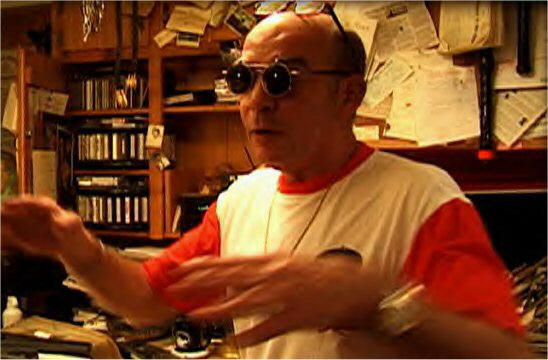 Breakfast With Hunter (United States, 2003)
Although director Wayne Ewing has been following journalist Hunter S. Thompson for almost twenty years with a camera, the bulk of the material in this documentary was shot in 1996 and `97 as Hunter was simultaneously celebrating the 25th anniversary of the publication of his landmark book Fear And Loathing In Las Vegas and fighting a court battle over a drunk driving charge. Hunter travels from his "heavily fortified compound somewhere near Aspen Colorado" to both coasts, making appearances at parties, readings of his work and hobnobbing with other celebrities. While no deep truths are uncovered about the writer, just being a silent observer of the whirlwind of activity that surrounds him makes for fascinating viewing. Of interest to film buffs is the ten minutes of footage from a meeting between Thompson and film director Alex Cox who had been hired for the film adaptation of Fear And Loathing, but walked off of the project a mere weeks before the film was supposed to begin production. (Terry Gilliam eventually replaced Cox in the director's chair.) This is a rare glimpse at the euphemistic "creative differences" that are often eluded to but seldom elaborated on in Hollywood.
 Otaku Unite (United States, 2004)
Although the Festival program makes this documentary sound like Japanese animation fandom's answer to Trekkies (1997), it's not. (Otaku are fans whose love of Japanese animation, or anime, often crosses the line to obsession.) For one thing Otaku Unite is more respectful of its subject, never using them as an intentional source of humor. You won't see a variation of Trekkies' hysterical "Last year a girl came (to our club's barbecue)" moment here. Instead, the documentary talks with fans, convention organizers, and some of the shows' American syndicators, building a history of the anime fandom and an examination of the sub-categories that anime fans fall into. While it may make for a drier viewing experience, it allows Otaku Unite to stand more as a document of a growing fan community in the United States. Animation fans might not learn anything new about themselves, but with its historical overview of anime and its American fandom, the film makes a handy primer to show non-fans what their addiction is all about.
A Tale Of Two Sisters (South Korea, 2003)
Everything that The Park does wrong, A Tale Of Two Sisters does right, as this Festival highlight is hands down one of the scariest and most effective horror films in recent memory. Director Kim Ji-wun has created a remarkably effective horror film that relies on both atmosphere and quick scares to thrill its audience. Even daylight scenes have an air of foreboding to them. After an unspecified illness, two young teenage girls return home to their father and new stepmother. However, there's tension between the sisters and their stepmother, which increases as mysterious things start to happen in the house. As the young girls, Su-jeong Lim and Geun-yeong Mun give incredibly natural performances while Jung-ah Yum's portrayal of the stepmother swings back and forth from sweetness to spiteful in the blink of an eye. The plot kicks into high gear in the second half of the film and each plot twist will have you reanalyzing what is happening and which characters you sympathize with. To say anymore would be venturing into spoiler territory and this is one film that benefits from the surprises it springs on its audience.
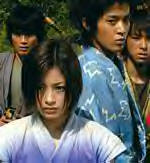 Azumi
(Japan, 2003)
Azumi
(Japan, 2003)
Japanese director Ryuhei Kitamura (Versus) moves up to the big leagues with his first film for a major studio, in this case Toho Pictures. But the bigger budget available has not weighted down the action auteur's fluid and kinetic camera work. (There's a dizzying shot towards the end as two adversaries face off on a rickety bridge that that's breathtaking and vertigo inducing.) Instead, the audience is treated to a more sumptuous production design, larger scale sword battles and even more copious amounts of squirting blood. Orphaned as a young child, Azumi (Japanese pop star Aya Ueto) has been raised to be part of a team of fierce assassins charged with dispatching three warlords who threaten Japan with war. While the first assassination goes well, the second warlord is ready for the young warriors and by the end of the film Azumi finds herself alone facing a whole town of killers led by an effeminate and psychotic swordsman (Joe Odagiri). Azumi is great popcorn fun.