14th Annual Philadelphia Film Festival
By Rich Drees
 Marebito
(Japan)
Marebito
(Japan)
The story of a news cameraman Masuoka’s (Shinya Tsukamoto) literal descent into the underworld and the consequences of the that trip is probably one of the most experimental pieces playing in this year’s Danger After Dark program tract. Whereas director Takashi Shimizu’s previous work- the Japanese horror series Ju-On as well as its English language remake The Grudge - were straight forward, mood driven horror stories, Marebito is a more like a lucid dream that turns into a waking nightmare. Like many dreams, Marebito unfolds at a pace that is sometimes laconic and at other times choppy. The dream-like effect is amplified by numerous Dutch angles and shaky, handheld camera work. The shot-on-video quality of the picture further disconnects the viewer from a regular film-watching experience. We don’t need the cameraman’s exclamation “The Mountains of Madness” upon entering the lost underground world to make a connection to early horror writer H. P. Lovecraft’s work, which also relied on a dreamlike quality to help produce its chills. Tsukamoto’s cameraman has an impassive stare, as unblinking as the lens of his video camera. Shun Sugata, as the feral girl whom Masuoka finds in the underworld and brings back to the surface, does a fine job conveying her alien-ness through body language alone. However, the film’s rather unfocused narrative makes it hard to recommend to all but horror film fans who are open to a bit of experimentation.
 Frozen
(Great
Britain)
Frozen
(Great
Britain)
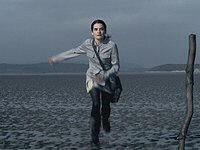
Two years after her sister Anna’s unsolved disappearance, Kath (Shirley Henderson) is still having trouble moving on with her life in a small port town in northwest England. Refusing to believe the police’s theory that Anna may have simply up and moved to another town, Kath feels that her sister has met a far more grisly end. After acquiring (i.e., stealing) a security camera videotape capturing the last glimpse of her sister prior to her disappearance, Kath begins to have strange visions, which she feels are messages from Anna. Frozen walks a very thin line, asking viewers if the story is a supernatural mystery or a look at one woman’s descent into mental instability. Director Juliet McKeon maintains that balance fairly well, offering gritty images of the port town that still manage to contrast with the stark, haunting world of Kath’s visions. Events move at a slow measured pace, perhaps reflective of life in that part of England. However, the film goes a bit astray when Kath gets into a sudden, but unconsummated, affair with the local vicar, whom is also her therapist. This plot element seems to have been included only as a means of providing the audience with a character through which to interpret Kath’s final fate.
 Crying Out
Love, In The Center Of The World
(Japan)
Crying Out
Love, In The Center Of The World
(Japan)
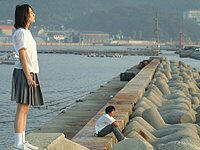
The poetically titled Crying Out Love, In the Center Of The World was the top live action box office attraction in Japan last year, second only to Miyazki’s Howl’s Moving Castle in overall popularity. After being left by his fiancée Ritsuko (Kou Shibasaki), Tokyo businessman Sakutaro (Takao Osawa) finds himself returning to the town he grew up in to wallow in the memory of his first love, Aki (Masami Nagasawa), through a series of letters on audiotape they exchanged. Flashing back to 1986, the film’s steely blues give way to bright warm colors as we watch the two meet and fall in love. But as the summer draws to a close, things turn tragic when Aki is discovered to have leukemia and Sakutaro (played in the flashbacks by Mirai Moriyama) struggles to keep her spirits up. To be sure there are many familiar story elements in Crying Out Love…, but their familiarity doesn’t diminish their effectiveness. The film is pure, tear-jerking melodrama; but it is a melodrama masterfully told, at times epic in sweep- yet never loosing a sense of intimacy for its characters. The film offers a few surprises, chief among them the reason Ritsuko left Sakutaro, before moving onto its bittersweet finale. It is easy to see why this film, like any successful genre reinvention, has spawned a new cycle of imitators in Japan.
 Z Channel: A
Magnificent Obsession
(United States)
Z Channel: A
Magnificent Obsession
(United States)
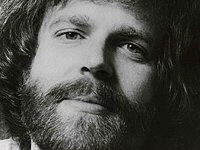
Although many movie fans probably don’t know it, they owe much to Jerry Harvey. For most of the 1980’s, Harvey was the head programmer of Z Channel, a regional cable outlet in Los Angeles. Here Harvey programmed a staggering array of film - from undiscovered foreign films to overlooked classics to obscure cult films. Harvey championed an eclectic variety of films. The station’s airings of Annie Hall and Salvador after they had received little critical notice are credited with helping to raise those films’ profiles in time to be nominated for Academy Awards. Dutch director Paul Verhoeven credits Z Channel’s airings of his European-produced films with helping to acquaint the Hollywood establishment with his work, allowing him to land his first American film, Flesh + Blood (1985). Harvey pioneered the idea of “Director’s Cuts” with airings of the un-studio-adulterated versions of Heaven’s Gate (1980) and Once Upon A Time In America (1984), wanting to show that the director’s vision for a film was often superior to a studio’s wishes (Ironically, “Director’s Cuts” are now a part of many studio’s DVD marketing plans.). In the words of director Henry Jaglom, subscribing to Z Channel “was like having a film festival in your home every single night.” Unfortunately, much like the heroes of The Wild Bunch (1969), one of his favorite films, Harvey and Z Channel found themselves passed over by the changing landscape of the cable business. And for Harvey the stress, combined with a life long history of mental problems, brought his life to a tragic end. With little actually footage of Harvey available, the documentary relies heavily on talking head interviews from Harvey’s co-wrokers, friends and directors like Robert Altman, who had several of his films rescued from obscurity by repeated airings on Z Channel. Harvey was very close-mouthed about his childhood, even to those closest to him, so the film can only dig so deep into Harvey’s demons. Was Harvey’s obsession with movies an escape from his troubled upbringing? And if so, was he driven to his suicide when he saw that the film haven he built for himself was in danger of collapsing? The film offers no answers, but does paint a fascinating a time when one man shared his love for film and engendered that love in those around him.