Historic Beekman Theater Closes Doors
By Rich Drees
 |
|
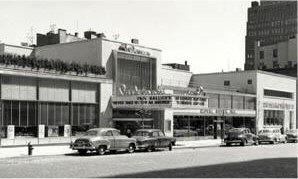
New York City's Beekman Theater in April 1952. |
June 28, 2005- The Beekman Theater, the single-screen movie house on New York City’s Upper East Side immortalized in a classic scene in Woody Allen’s Oscar-winning comedy Annie Hall, closed its doors this past Sunday, June 26, 2005 and is scheduled for demolition later this summer.
The Beekman, which has been operated by Clearview Cinemas for the last six years, is not the victim of declining tickets sales, however. The theater’s landlord, Memorial Sloan-Kettering Cancer Center, had decided to not renew the theater’s lease. Instead, the hospital is planning on razing the theater – located on Second Avenue between 65th and 66th Streets - along with a bank and two existing Memorial Sloan-Kettering buildings, in order to construct a new outpatient breast cancer and imaging center. The hospital states that it has outgrown its existing breast center on East 64th Street. The hospital acquired the property in 1989.
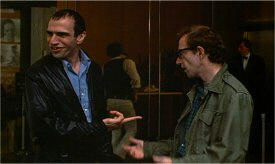
"The Beekman epitomized New York movie houses at their best," stated Woody Allen, in an interview with the Reuters news service. "The size, the architecture, the location seemed perfect. I saw many great films there by great foreign filmmakers, and it was an honor to have my films shown there.” In Annie Hall, Allen plays a television comic who gets hassled while waiting for his date in front of the theater by an autograph seeker.
 |
|
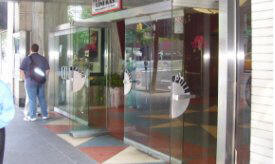
The entrance to the Beekman Theater in Woody Allen's Annie Hall (above) and on its closing weekend (below). |
 |
The theater was one of the last single-screen venues in Manhattan and was considered a premier destination to see a film. The Streamline Moderne, late-period art deco theater opened its doors in the last week of April 1952 and was noted for its plush, high-backed chairs, rich carpeting and wood-paneled walls. Cost of construction was approximately $1 million and was financed by the New York Life Insurance Company as part of a plan to make the block face into a modern shopping center. Throughout a majority of its history of operation, the theater would always open and close the curtains in front of its screen before and after each presentation. The curtain motor reportedly burned out in May 2005 and no attempt was made to replace it for the theater’s last month of operation.
An attempt to have the Beekman named an historical landmark for its architecture had been launched by the Friends Of The Upper East Side Historic Districts. The group contended that the results of the Second Avenue Subway Environmental statement issued in 2003 made the theater eligible for National and State historic landmark status. The group submitted a request to New York’s Landmark Preservation Committee, though no action was taken by the committee.
This marks the second time in recent months that a New York City landmark familiar to film fans has been condemned to disappear in the name of real estate development. In August 2004, the famed Plaza Hotel, used as an actual location in such films as North By Northwest (1959) and Plaza Suite (1971), was sold to a United States investment group for $675 million. The group originally planned on converting the entire building into condominiums and retail space. After a public outcry, the plan was changed so that 80 of the building’s 805 rooms would remain as a hotel. The developers have stated the hotel’s famed Oak Bar, from where Cary Grant is kidnapped at the beginning of Alfred Hitchcock’s North By Northwest, would remain unchanged. The same weekend that the Beekman closed its doors, the new owners of the Plaza were conducting a sale of the building’s furniture, fixtures, chandeliers and doorknockers.
Clearview Cinemas has stated that as part of the renovation of their New York One and Two Theater, located one block north of the Beekman on Second Avenue, the theater will be renamed the Beekman One And Two.
The last film screened at the venue was director Sydney Pollack’s thriller The Interpreter, which was filmed on location in New York.