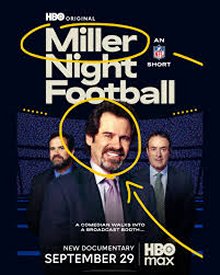
Miller Night Football does a great job of not just charting Miller’s tenure on the venerable television sports franchise, but of contextualizing it within the larger history of the show. A creation of ABC network executive Roone Arledge and NFL commissioner Pete Rozelle – with a trio of announcers covering the game – the love-him-or-hate-him Howard Cosell, “Dandy” Don Meredith and Frank Gifford – the show electrified fans from it’s first broadcast in September 1970 all the way through to almost the end of the century. But as the 1990s started to encroach on the 2000s, the show had lost some of it’s spark. Cosell had stepped away from the show in 1984 with Meredith departing a season later. By 1999, coverage for the game of the week was being presented by just two commentators, Al Michaels and former NFL star Boomer Esiason.
This is where incoming ABC Sports President Howard Katz decided that the show needed some sprucing up in order to compete with the growing number of cable television options competing for potential viewers’ attention. Katz reached out to former Monday Night Football turned NBC executive Don Ohlmeyer for some advice, who came up with the plan of returning to the show’s three-person announcing team structure with one of the announcers being an unconventional Cosell-like choice.
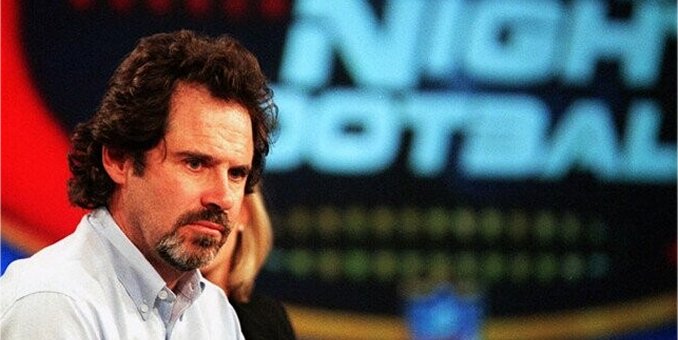
Enter former Saturday Night Live “Weekend Update” wiseacre Miller, who managed to beat out the likes of SNL alum Billy Crystal and right-wing talk radio host Rush Limbaugh for the gig. While seemingly an unconventional pick on the surface, Miller has been a lifelong football fan, and early in the documentary recalls seeing the famed “Immaculate Reception” from the Steelers – Raiders game in 1972 and other key moments of Steeler’s history while growing up in Pittsburgh.
(Miller Night Football doesn’t mention Ohlmeyer’s contentious history with Saturday Night Live. As president of NBC’s West Coast division he had publicly complained about the quality and cost of the show, and was instrumental in removing cast member Norm McDonald from the “Weekend Update” segment on the show, ostensibly seen at the time due to his friendship with OJ Simpson in the face of McDonald’s relentless hammering of the former football star who was at the time on trial for the brutal murder of his ex-wife.)
It was a match made somewhere, but not necessarily heaven. The choice of Miller certainly got people buzzing, something that pleased Katz. Miller’s often-times erudite references irritated some viewers who weren’t ready for mentions of Sylvia Plath or environmental artist Cristo. (Encyclopedia Brittanica started an online blog that would annotate his commentary the following day.) Other viewers loved it. But with the like-it-or-loath-it feeling about his performance, Miller got what Ohlmeyer wanted, and that was people talking about the show again.
As Miiler’s second season loomed, he began to take a more serious approach to his job, spending time boning up on all the teams. It may have won him a bit of grace with football fans who weren’t necessarily fond of his wisecracks, but the writing was on the wall. Ratings were sliding and in the scant few weeks after 9/11, there was questions about whether humor belonged in the national discourse at such a somber moment. The sudden availability of sportscasting legend John Madden spelled Miller’s time in the booth at an end.
Miller being Miller, he manages to slide in references to Karl Wallenda, the patriarch of the famed circus performer family, and writer H. L. Manken within the first four minutes of this documentary. But he is also bracingly honest about his feelings about his tenure on the show, and his disappointment in not having a longer tenure in the booth still seems strong two-and-a-half decades later. He notes that how he had trouble finding his comedic rhythm in the early week’s of that first season while also being honest about how his change in approach for his second season on the show may have undercut why he was there to begin with.
Overall, Miller Night Football is an interesting and frank look at one of the more unusual, if somewhat short, eras of the sports franchise that will most likely appeal to both sports and comedy fans.