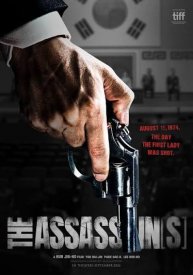
 On the 15th of August, 1974, a gunman armed with a five-shot Smith and Wesson pistol opened fire on South Korean Korean president Park Chung-hee, missing the president but fatally wounding his wife, First Lady Yook Young-soo. An official investigation concludes that the gunman had acted alone, but the staff of one Seoul newspaper soon discovers that there are numerous inconsistencies in that report. But as they dig into the irregularities, the face strong and ultimately violent resistance from the country’s repressive government. Directed by Hur Jin-ho, The Assassin(s) turns this real life story into one of the tautest and exciting political thrillers of the past several years.
Set against a rather turbulent time in South Korean history, The Assassin(s) does good work in setting its stage for any audience that are unfamiliar with the larger issues involved. Park came to power in 1961 as one of the leaders of a military coup, and then becoming President in elections held in 1963. President Park’s rule leading up to the assassination attempt had been a fraught one, with violent crackdowns on any sort of disagreement with the government. News outlets had agents from the Korean Central Intelligence Agency who would approve what could be published. Those who wanted to go against these agents’ decrees were often strongly “discouraged” to do so, to put it euphemistically. Into this world come a group of newspaper men and women who reject the government censorship and strive to “see what you can and write what you should.”
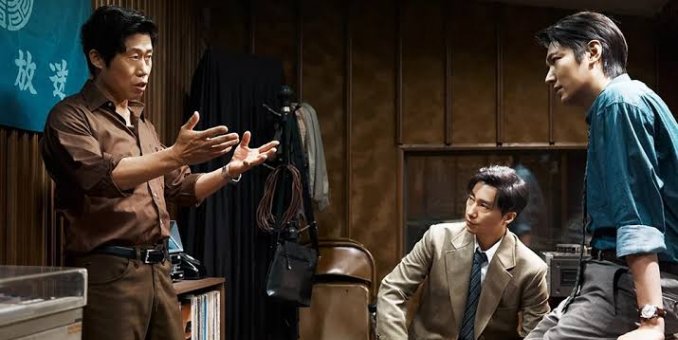
While watching The Assassin(s), it is hard to not think about similar films from the Hollywood cannon. But this film is much more an investigative thriller like Spotlight than conspiracy thriller like Oliver Stone’s JFK. The movie takes us through the process of the journalists’ investigations, seeing how they share notes on their individual stories to build up the larger picture of what may have actually happened. Hur builds his story methodically, allowing the tension to slowly build. As the reporters draw closer to a possible truth about the assassination attempt and its possible darker aims and motives, the danger ceases to become hypothetical and very real. In the end, Hur does not point the finger at any one individual or group as a co-conspirator. He raises the questions, and shows how the evidence that fuels them was discovered, avoiding the didacticism that Stone’s film is known and in some quarters criticized for.
As the story unfolds and the reporters grow closer to perhaps reaching the truth, the film itself seems to get angrier about the roadblocks that they keep facing right up to its explosive climax. As such, the film becomes a rallying cry for the power of good journalism and the need for it in the face of oppressive governance. That is a message that transcends this particular story, and, unfortunately, still needs to be heard today.