Tag Archive | "Arnold Schwarzenegger"

Tags: , ,

What the-?! Schwarzenegger To Star In TOXIC AVENGER Remake

Posted on 13 May 2013 by Rich Drees

ArnoldSchwarzeneggerWell, this is one of those headlines I never expected to write.

Arnold Schwarzenegger is going to be starring in a big screen remake of the classic Troma film The Toxic Avenger with Hot Tub Time Machine director Steve Pink at the helm.

Honestly, at first thought, it sounds like a bad idea. And at second and third thought it still sounds like a bad idea. The Toxic Avenger is known in part for its campy, comedic tone. While I don’t doubt that Pink could bring a similar feel to a remake, time and time again Schwarzenegger has never shown any real comedy chops.

Here’s the press release –

Los Angeles, CA (May, 2013) –Action superstar Arnold Schwarzenegger (TERMINATOR series, TOTAL RECALL) is in negotiations to star in writer/director Steve Pink’s (HOT TUB TIME MACHINE 1 & 2) big budget action comedy THE TOXIC AVENGER produced by Akiva Goldsman (CONSTANTINE, I AM LEGEND, MR AND MRS SMITH), Richard Saperstein (HANCOCK, 1408, SE7EN), Charlie Corwin (HALF NELSON, THE SQUID AND THE WHALE), Stephen Kessler and Michael Benaroya (LAWLESS, MARGIN CALL). Lloyd Kaufman and Michael Herz will executive produce. The announcement was made today by International Film Trust’s (IFT) President Ariel Veneziano who will handle all international rights to the film alongside IFT’s Head of Sales Christian de Gallegos.

Set to be introduced to buyers at Cannes 2013, THE TOXIC AVENGER is currently in pre-production and scheduled to start principal photography this fall.

Loosely based on Lloyd Kaufman’s classic Troma franchise, THE TOXIC AVENGER is the tale of a high-school kid who gets dunked in a vat of toxic waste by a corrupt chemical company. He survives the ordeal with one major side effect: upon contact with toxic chemicals, he transforms into a monster with superhuman strength. Schwarzenegger would play “the Exterminator,” a former black ops agent, who trains Toxie to use his powers for good. Together they take on the lurking menace created by the polluters, and the polluters themselves.

“Moviegoers around the world were thrilled when Arnold Schwarzenegger returned to acting so effortlessly filling the gap that he left behind,” said producer and IFT co-founder Michael Benaroya. “He is the ultimate action hero with a natural comedic versatility and will be pitch perfect in The Toxic Avenger.”

“Our film is a perfect combination of commercial genre, star power and award winning filmmakers to set it apart from other titles on offer at Cannes this year. The Toxic Avenger is a blockbuster in waiting with franchise potential. The buyers will love it,” said IFT President Ariel Veneziano.

Arnold Schwarzenegger’s role in James Cameron’s THE TERMINATOR series solidified his place as one of the leading action hero actors with roles in blockbuster hits including PREDATOR, TOTAL RECALL, TERMINATOR 2: JUDGEMENT DAY and TRUE LIES. Proving to be a multi-talented performer, Schwarzenegger crossed over into comedic roles with box office hits TWINS opposite Danny DeVito and Ivan Reitman’s KINDERGARTEN COP. After taking an extended break to become the Governor of California, Schwarzenegger returned to acting in 2012 with THE EXPENDABLES 2, which grossed over $300 million worldwide. He will next be seen in Summit Entertainment’s ESCAPE PLAN and Open Road Films’ TEN. He is represented by CAA and Patrick Knapp at Bloom Hergott Diemer Rosenthal LaViolette Felmdman Schenkman & Goodman.

Via Deadline.

Comments (6)

Tags: , , , , , , , , , , , , ,

New Releases: February 1, 2013

Posted on 31 January 2013 by William Gatevackes

WarmBodiesPoster1. Warm Bodies (Summit Entertainment, 3,009 Theaters, 97 Minutes, Rated PG-13): Let’s get one thing straight; Shaun of the Dead is the best zombie romantic comedy there ever was, and it likely will be for the foreseeable future.

But this doesn’t mean that there’s not room for more zom rom coms, especially ones with an inventive twist to them.

Based on teh novel of the same name, the film focuses on a zombie named R (Nicholas Hoult) who comes across Julie  (Teresa Palmer), a woman fighting his kind. Their eyes meet. A spark happens. And when R saves Julie from an attack from an especially vicious breed of zombie, they realize that something is happening. But what is happening? And what does it have to do with R eating Julie’s boyfriend’s brain?

The fact that a zombie can turn back to being more human through the power of love might be a bit too much for hardcore zombie fans to accept, but I think it’s an interesting take on the genre. I’d be interested to see where they go with it.

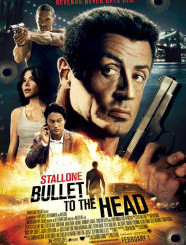
BulletToTheHeadposter2. Bullet To The Head (Warner Brothers, 2,404 Theaters, 91 Minutes, Rated R): Two weeks ago, it was Arnold Schwarzenegger making his return to the big screen. Now, its Sylvester Stallone. Granted, Sly has been a bit more active than Arnie in the last few years, but I’m holding out hope that this is the start of a 80s octogenarian action movie icon revival. Maybe Chuck Norris is next!

Stallone plays a hit man who teams up with a Washington, DC cop to gain vengeance against a common foe who killed both of their partners.

This film is also the year’s first comic book adaptation. It was based on a French graphic novel by Alexis Nolent. That is not the only thing that adds an international flavor to the mix. The producers seem to be chasing after the worldwide market. The part of the cop was originally intended for Thomas Jane, but producers cast Asian-American actor Sung Kang in the hope that he would appeal to an Asian market overseas, with the idea that it would add to Stallone’s already strong international appeal. Whether or not the film does well in the United States might be inconsequential.


Comments (0)

Tags: , , , , , , , , , , , , , , , , , , ,

New Releases: January 18, 2013

Posted on 18 January 2013 by William Gatevackes

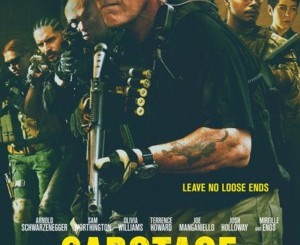
Last-Stand-NYCC1. The Last Stand (Lionsgate, 2,913 Theaters, 107 Minutes, Rated R): Conan the Barbarian. Commando. Predator. Total Recall. Terminator. True Lies. Say what you want about him, Arnold Schwarzenegger has an impressive resume of quality action films to his credit. He also has a number of questionable choices in his later career as well, so it is with great interest to see what the former California governor chooses for his return to acting after the end of his political career.

What he chose, well, I guess we’ll have to see what category it falls in. He plays a small town sheriff in a California border town that is faced with a big challenge–he must stop a drug lord and his heavily armed cartel from making it to the Mexico border with only a inexperienced and short-handed staff.

On one hand, it could be the simple kind of plot that Arnold pulls off so well. On the other hand, it could be considered silly and implausible if not done well. The early reviews have been somewhat favorable. We’ll have to see if Arnold’s return to lead roles is a sign that he is back.

MAMA_TSR1SHT_12X19_RGB_12. Mama (Universal, 2,647 Theaters, 100 Minutes, Rated PG-13): Two young girls are found in the woods, more feral than human, five years after being abandoned by their homicidal father. They are taken to their uncle and his girlfriend (played by a deliciously gothy Jessica Chastain) to begin the healing process. But the couple finds out that two young children do not survive in the wilderness alone, and their protector is none too happy that they were taken away. What happens when the protector comes to take the children back?

The film both has a lot going for it (it was produced by Guillermo del Toro,  stars the twice Oscar-nominated Chastain in the lead role, and the director of the Argentinian short film it was based on, Andres Muschietti, is back to direct the full-length ) but also has a lot going against it (the plot stretches credibility for even a horror film, the film was supposed to open in the more horror friendly October but instead was pushed to the film wasteland that is January, and–personal preference here–it is a PG-13 horror film). It doesn’t seem like a slam dunk horror flick to me.

Broken-City-2013-Movie-Poster3. Broken City (Fox, 2,620 Theaters, 109 Minutes, Rated R): Now, a film featuring some of the greatest actors in film today–and Mark Wahlberg.

Okay, that might not be entirely fair. While Russell Crowe and Catherine Zeta-Jones might have Oscars, Wahlberg does have a nomination. But his work here as seen in the ads for the film seem worthy of a SNL mocking (when he says in the trailer “Your husband set me up. And I’m going to destroy him for it,” my mind keeps adding “Say hello to your mother for me” at the end of it).

Wahlberg play an ex-NYC cop who is hired by the city’s mayor (Crowe) to find out who is sleeping with his wife (Zeta-Jones). What was a simple trail and surveillance operation gets far trickier when a dead body shows up. Wahlberg realizes that he was set up by the mayor, and decides to bring him down.

Comments (0)

Tags: , , , , , ,

TWINS Sequel TRIPLETS Gets A Pair Of Screenwriters

Posted on 15 November 2012 by Rich Drees

Universal has announced that they have signed Josh Gad and Ryan Dixon to develop the screenplay for their comedy Triplets. A sequel to the 1988 comedy Twins, the new film will find genetic twins Arnold Schwarzenegger and Danny DeVito discovering that they have another sibling – Eddie Murphy. Hilarity hopefully ensues. Gad and Dixon will work together on the treatment and then Dixon will take over for sole screenwriting duties.

Gad is perhaps best known for his Tony Award-nominated turn in the smash Broadway musical The Book Of Mormon, but he is also the co-creator and co-star of the upcoming Presidential comedy 1600 Penn, premiering in January on NBC. Gad will also appear in the upcoming Steve Jobs biopic starring Ashton Kutcher playing Apple co-founder Steve Wozniak.

Dixon oversees operations at screenwriting analysis website ScriptShark, This is his first scriptwriting job.

Honestly, I never thought Twins was all the funny. I found it a pretty thin premise to begin with (“They’re twins, but they look different! Get it?!”) and adding a third person into the equation just feels like they’re stretching it even further. Now while I am a fan of Gad’s work in Book Of Mormon and as a former infrequent correspondent on The Daily Show, I suppose we’ll have to wait until the premier of 1600 Penn before we have a better idea of how he may be as a writer.

Via Hollywood Reporter.

Comments (0)

Tags: , ,

Schwarzenegger Returns To CONAN!

Posted on 25 October 2012 by Rich Drees

Check your calendars. It’s not April 1st. Arnold Schwarzenegger is returning to the Conan franchise and the barbarian role that launched him into superstardom.

Deadline is reporting that the actor has signed onto The Legend Of Conan to be produced by by Fredrik Malmberg and Chris Morgan through Paradox Entertainment. Paradox also produced last year’s Conan which starred Jason Momoa in the title role. Unfortunately, this makes him now the George Lazenby of the Conan franchise.

Universal Studios, who released the first Schwarzenegger Conan film back in 1982, is set to distribute the film.

Morgan is quoted as stating that this film will ignore the events of both the Momoa film and the Schwarzenegger-starring 1984 sequel Conan The Destroyer. It will pick up on Conan’s later life when we see him as a king, set up by the last image of the first film. The director of Conan The Barbarian, John Milius, authored a sequel script, Conan: Crown Of Iron. That dealt with that same time period. The producers are more likely to look for a new writer for this film. But so far, no writer or director have been attached to the project, but with Schwarzenegger’s involvement, I would imagine that folks are lining up right now to talk with the producers.

Comments (1)

Tags: , , , , , , , , , , , , , , , , , , , , , , , , , , , , , , , , ,

HISTORY OF THE COMIC BOOK FILM: Tragedy And THE CROW

Posted on 07 September 2012 by William Gatevackes

In a multi-part series, Comic Book Film Editor William Gatevackes will be tracing the history of comic book movies from the earliest days of the film serials to today’s big blockbusters and beyond. Along with the history lesson, Bill will be covering some of the most prominent comic book films over the years and why they were so special. This time, we’ll look at the tragic comic book film that adapted a tragic comic book—The Crow.

The biggest thing that the comic book The Crow had in common with its film adaptation is the role tragedy played in the making of each of them. James O’Barr wrote and drew the first Crow miniseries as a way to escape the pain caused by his fiancée’s death, and The Crow film had a macabre shadow cast over it by the untimely death of its star, Brandon Lee, during production.

James and Beverly Ann were high school sweethearts that knew, even at that very young age, that they wanted to spend the rest of their lives together. They became engaged to be married, a wedding that would come after they graduated high school.

That wedding would never come. Beverly Ann was killed by a drunk driver shortly before that anticipated graduation, in early 1978. As is often the case with young love, James had a hard time dealing with the loss. He enlisted in the Marines, hoping the stability of the military would take his mind off Beverly Ann. It didn’t. Seeking solace, he decided to put pen to paper. While stationed with the Marines in Germany, while working as an illustrator of military manuals, he read an article about a couple from his hometown of Detroit that were killed over a $20 engagement ring. Seeing a corollary between that tragic event and his own, he used it in 1981 as the framework for an origin story in a comic book that he hoped would allow him a cathartic release from his own pain and sadness.

The James in question is James O’Barr and that comic book is, of course, The Crow.

The original comic focused on Eric and his fiancée, Shelly. Just before they are about to be married, their car breaks down in a bad part of town. A drug-addled street gang comes across them and decides to have a little fun. They shoot Eric in the head while they brutally rape and beat Shelly. The gunshot leaves Eric paralyzed and dying, able to watch the torture Shelly is going through yet helpless to stop it. The gang leaves them by the side of the road, where they each die from their injuries.

One year later, a mystical crow resurrects Eric and offers him the chance at vengeance. Wearing harlequin makeup and dressed in black, Eric dubs himself The Crow, and begins the process of hunting down the gang members that killed him and Shelly.

You don’t have to be a psychologist to see what O’Barr was doing with this comic. There is anger, pain and sadness on every page. You can easily see the parallels between O’Barr’s life and Eric’s. Both lost the woman they loved in a senseless act of violence. Only O’Barr gives Eric a number of culprits to take out his anger and frustration, his sorrow and loss, on, a luxury O’Barr never had for himself.

Being that The Crow was somewhat hard to pigeonhole—too violent to be a gothic tale of revenge, too literate and morose to be your typical superhero comic—O’Barr had a hard time finding a publisher. It wasn’t until 1989, eight years after O’Barr started the comic, that Caliber Comics decided to put the book out.

The book was a cult hit. What Caliber, and later Tundra, Kitchen Sink, Image and IDW, realized that the other publishers didn’t was that there was something in The Crow that would resonate with readers beyond just a genre. The story was a doomed romance. It was about the pain of losing someone you cared about. It was anger at what was taken from you and the wish fulfillment of striking back at those who had hurt you the most. These qualities are more prevalent amongst people than one might care to admit, and O’Barr had given them all a voice.

With the successful cult comic came Hollywood offers. O’Barr sold the rights to four movies to Ed Pressman and Jeff Most. At first, the creator and the producers weren’t on the same page at all. At an early production meeting with movie executives, O’Barr was presented with their ideas for the film—one of which was a musical adaptation starring Michael Jackson. While the powers that be moved away from that horrible concept, the first few scripts that came in bore no resemblance to the comic at all. Things didn’t start turning around until director Alex Proyas and Brandon Lee came on board.

O’Barr originally had reservations about Lee’s casting, believing that it was another sign that the producers had no idea as to what to do with his comic book. Since Lee was Bruce Lee’s son and had starred in films like Showdown in Little Tokyo and Rapid Fire, two martial arts-ish action films, O’Barr thought The Crow was headed in the same direction. But Lee impressed the Crow’s creator by studying the original comics to such a point that the actor could quote lines from it back to O’Barr.

The Crow was a risky venture for Brandon Lee, one he really didn’t need to take. His name and parentage could garner him a career in the martial arts action film with little or no effort. But his charm, charisma and talent allowed him to make the most of his opportunities. If he stayed in the B-level action film, he could have a long and productive career, whether in the smaller low-budget films (like Dolph Lundgren and Michael Dudikoff), big budget blockbusters (like Arnold Schwarzenegger or Bruce Willis) or somewhere in between (like Steven Segal and Chuck Norris).

But Lee was trained as an actor at the Lee Strasberg Theatre and Film Institute. He wanted a role that was more of a challenge, and the role of Eric Draven would give him just that. And his performance in the film very well could have propelled him to superstardom if tragedy didn’t strike.

Proyas and the crew scheduled all of the non-Crow parts of the movie, including Eric’s death, until the last few weeks of production to allow Brandon to have the last days of shooting be makeup free. One of the first scenes to be shot during this period, just 8 days before shooting was to wrap and three weeks before Lee was set to marry his fiancé, Eliza Hutton, was Eric’s murder. In a change from the comic, Funboy (Michael Massee) and his gang attack and kill Eric and Shelley in their home, acting on orders from their boss, Top Dollar (Michael Wincott). Massee was supposed to shoot Lee with a gun full of blanks just as he got back from a grocery run. And that’s what he did, with one horrible, fatal problem.

The gun Massee used was in a scene shot earlier that was to show it being loaded. Typically, dummy rounds are used in these types of scenes, as they look exactly like real rounds only with no primer, propellant or explosive charge. They have a bullet at the end of the round but there is no way for it to be fired because it is inert. For this scene, due to budgetary and time constraints and the fact that they were filming in North Carolina instead of Hollywood, the crew didn’t have access to dummy rounds. They instead jury rigged live rounds by removing the explosive charge and propellant. However, they left the primer in. If fired, there would not be enough force to have the bullet leave the barrel, but there would be enough force to lodge it in the barrel.

And that was what happened. At some point between the loading scene and Eric’s murder scene, while the modified rounds were still in the gun, someone pulled the trigger, which caused the bullet to get stuck in the barrel. Blanks consist of rounds that have primer, propellant and explosive charge held in by a wad of wax, wood or cotton, but no bullet. This is designed to give a realistic muzzle flash. As long as the blank is fired from a safe distance, they are harmless. But, due to the fact that they have the same firing power as a real round, if the blank is fired at a close enough distance, it could be fatal (as is what happened to Jon-Eric Hexum on the set of the TV series Cover Up, who, as a joke, held a gun containing blanks up to his temple and fired. The wad hit Hexum’s skull with enough power to send parts of his skull into his brain, resulting in brain death). And if there was a bullet lodged in the barrel, the round would then become essentially live ammunition.

When Massee fired the blank at Lee, it propelled the bullet in the barrel into Lee’s abdomen. The bullet perforated many of Lee’s internal organs, including his stomach, and ruptured a major artery, causing massive internal bleeding before lodging in his spine. It has been said that even if the accident took place in the emergency room of a hospital, there would have been  no way to save Lee.  Lee was pronounced dead at 1:04 pm on March 31, 1993. He was 28 years old.

Brandon Lee’s death would have been tragic under any circumstances. If the firearms expert had been there, he would have checked the barrel. If Massee aimed just a few inches to the right, this would have been avoided. Add to the fact that his father died at the age of 32 and his death has been the focus of a number of conspiracy theories (Killed by the Triads? A supernatural curse?) and the accident that killed Brandon took on an entirely different dimension. Add to that the fact that Brandon was killed while filming his character’s death and his character was set to marry his true love if he wasn’t killed, and Brandon’s death becomes all the more unusual.

Brandon Lee’s death, as horrible and as callous as I feel saying it, makes The Crow a better film. The fact that you are watching the best performance Brandon Lee ever made as the last performance he ever made adds an almost unbearable sense of melancholy to the film. And since the story is melancholic to begin with, the tragedy enhances the mood of the film. The sadness I feel for Brandon Lee’s death parallels the sadness his character, Eric Draven, is experiencing on screen, therefore it’s easier to get drawn into the film.  The tragedy transforms the film into an entirely different experience. I don’t know if the film would have been as successful, either critically or financially, if Brandon Lee survived the process.

But since the film was a success and the producers had the option for three sequels if they chose, they went into production on a follow up, 1996’s The Crow: City of Angels.

Director Tim Pope (known mostly for his music videos) and writer David S. Goyer (writing the first of what would be many comic book adaptations) fought with Miramax over the tone of the film, Pope and Goyer wishing to honor Lee by making the film as different as can be, Miramax wanting characters from the first film such as Sarah and the resurrected Top Dollar, to be included in the sequel. Pope and Goyer included Sarah as a peace offering, but lost out in the end as the studio recut the finished film after the fact to make it more tonally similar to the first film. If continuing with production on The Crow was a tribute to Brandon Lee, what Miramax did with this film is the equivalent of grave robbing.

After that, the law of diminishing returns came into effect. There would be two more sequels: 2000’s The Crow: Salvation in which an executed convict falsely convicted of killing his girlfriend comes back as the Crow, and 2005’s The Crow: Wicked Prayer, which featured a Native American ex-con who is killed along with his girlfriend by Satanists only to come back for revenge. Neither film got much, if any, of a theatrical release and both have been widely panned by critics.

A remake of the first Crow film has been in the works since 2007, with Stephen Norrington originally attached to direct, later to be replaced by 28 Weeks Later’s  Juan Carlos Fresnadillo. Bradley Cooper was rumored to be in talks for the lead, but the project appears to be headed towards legal wrangling between current production company holders Relativity and distributors The Weinstein Group over who has the rights to distribute the movie. Tying the remake up in legal red tape might be the best thing to happen to it.

Next, things get a little lighter as we cover Jim Carrey’s first, and best, foray into portraying a comic book character.


Comments (0)

Tags: , , , , , , , , , , , , , , , , , , , ,

New Releases: August 17, 2012

Posted on 17 August 2012 by William Gatevackes

1. ParaNorman (Focus Features, 3,429 Theaters, 93 Minutes, Rated PG-13): Stop-motion animation has the air of an especially quaint form of film making. It is time consuming, exacting, and considering you get a similar look and feel from CGI animation, seems especially archaic. That’s what makes it all the more charming.

Of course, charming might not be the right word for this one. This film centers on a young boy who has the ability to see ghosts. He stumbles across an centuries old curse and must save his town from legions of the undead.

2. The Expendables 2 (Lionsgate, 3,316 Theaters, 102 Minutes, Rated R): I feel I don’t even need to talk about this film, because The Expendables 3 is already in the works. Nicolas Cage is already on board, and producers have a wish list that includes Clint Eastwood, Harrison Ford and Wesley Snipes (All the while, a lonely Steven Seagal sits by the phone, desperately waiting for a call that looks likely will never come).

Of course, we’ll have to see how this one does first. They’ve upped the ante by adding Jean-Claude Van Damme and Chuck Norris to the cast and supposedly signing Arnold Schwarzenegger and Bruce Willis up for more screen time. But will that be enough to have this one improve in the surprising success of the original?

3. Sparkle (TriStar, 2,244 Theaters, 116 Minutes, Rated PG-13): This film is a remake of the 1976 film of the same name that starred Lonette McKee, Irene Cara, and Phillip Michael Thomas. It is a pastiche of the story of the Supremes, only with the 60′s singing group in question being sisters who fall apart as fame takes hold instead of complete strangers.

It is a story that hold some interest and has been made into movies and musicals a number of times (Dreamgirls, anyone?). But this version has an extra dollop of pathos being that its the last film of Whitney Houston.

The original had a plot line that one of the sister’s downfall was brought on by drug abuse. I wonder if that plot point carries over to the remake, and how fans of Houston will react to it considering the pop star’s final fate.

Comments (0)

Tags: , , , , , , , , , , , , , , , , , , , , , , , ,

HISTORY OF THE COMIC BOOK FILM: Holy Failures, Batman!

Posted on 04 May 2012 by William Gatevackes

In a multi-part series, Comic Book Film Editor William Gatevackes will be tracing the history of comic book movies from the earliest days of the film serials to today’s big blockbusters and beyond. Along with the history lesson, Bill will be covering some of the most prominent comic book films over the years and why they were so special. This time, we come to the dark ages of the Batman franchise—Batman Forever and Batman and Robin.

I can trace the moment I knew the Batman franchise was in trouble to one particular scene in Batman Forever.  Batman, now played by Val Kilmer, had just finished a heart to heart with Dr. Chase Meridian (Nicole Kidman) and as he leaves, Meridian tells him to be careful out there. Batman, whose back is to Meridian yet facing the camera, flashes the goofiest grin you would ever see. No, not a subtle smile or a acerbic smirk, but the type of grin the school bookworm in an ABC Family telefilm would grin if she was just asked out by the star quarterback. You can see the grin around the 1:47 mark on the trailer.

I don’t know if this was a particular director’s note from new franchise director Joel Schumacher or a sly bit of sabotage by Kilmer (who’s combative relationship with Schumacher doing filming was legendary), but the smile was so glaringly out of character that it made me fear for the franchise’s future.

Warner Brothers was not happy with Batman Returns’ $266,822,354 box office take, and put the blame for what they felt was a lackluster performance on the dark tone Tim Burton gave to the film. Warners convinced Burton to move to producer and brought in Schumacher with an eye on making a more kid-friendly (and toy generating) flick. Michael Keaton bailed on the franchise once he found out the direction it was going in. Smart man.

Schumacher replaced Burton’s dark moodiness with a garish, neon soaked cyberpunk look. Batman Forever was a loud assault on the senses. We begin to see more campy elements make their way into the film, including, but not limited to, the Batmobile being driven up a wall, the over-the-top performances of Jim Carrey as the Riddler and Tommy Lee Jones, who stepped in for Billy Dee Williams as Harvey Dent/Two-Face, and a painful, self-referential gag about “holey rusted metal” at the bad guy’s hideout. Schumacher also added nipples to the batsuit and an uncomfortable focus on generous codpieces and vinyl clad buttocks of Batman and Robin during the inevitable “suiting up” montages—a bit too hyper sexualized for what was supposed to be a kid’s film, in my opinion.

Batman Forever was a success, making $336,529,844 at the box office. A sequel was put on the fast track, with George Clooney replacing the contentious Kilmer as Bruce Wayne/Batman.  And, thusly, Batman & Robin was unleashed onto an unsuspecting world.

Batman & Robin was unabashedly, unapologetically campy. It was also horrible. Those of you, the lucky few who didn’t see the movie, might be asking a few questions. How campy was it? How bad could it really be? Let me show you:

I wonder what he does when he tries to use it at places that require a form of ID to verify the card. Does he toss a batarang on the counter? A typewritten list of all his daddy issues?

Clooney often speaks in a self-deprecating way about his performance in the film, like he’s solely to blame for how awful it is. He’s not. His portrayal of Bruce Wayne is a bright spot in the film. And his performance as Batman is hampered by the horrible screenwriting of Akiva Goldsman, who unbelievably would later win an Oscar for writing 2002’s A Beautiful Mind.

What did Goldsman and Schumacher get wrong this time around? Well, are you sitting down? You have to start with lame gags like the Bat-Credit Card. Then the lame puns spouted by all the characters, especially Arnold Schwarzenegger’s Mr. Freeze (it’s like Goldsman took all the “ice” related puns he could think of and put them all, good or bad, into the film).

Then you had Chris O’Donnell, who gave the worst performance by a grown man (he would turn 27 six days after the film opened) pretending to be a teenager overacting his way through an immature, crybaby tantrum (he’d hold the title until Hayden Christensen’s performance in 2002’s Star Wars: Episode II – Attack of the Clones). The film also introduced Batgirl in the personage of Alicia Silverstone, who played Bruce Wayne’s British butler Alfred’s niece, who came directly from her studies in London to visit her uncle, leaving all traces of any kind of British accent behind. She did have nipples on her batsuit and a lingering shot or two of her curves during her suiting up montage, proving that Schumacher is an equal opportunity fetishist.

There were also too many characters this time around. In addition to those already mentioned, you had Uma Thurman playing Poison Ivy as the second major villain (because you had to have two major villains in a Batman film). Plus, you had Bane, a character who broke Batman’s back in the comic books, a character that Christopher Nolan felt strong enough about to make a main villain in The Dark Knight Rises, relegated to a mindless, brutal lackey of Poison Ivy. An even bigger waste was the character of Jason Woodrue, who was an awesome character in the comics by the name of Floronic Man and was portrayed by the excellent actor John Glover. His only purpose was to establish Poison Ivy’s origin by being the mad scientist who gives her superpowers as a result of trying to kill her. He is killed off after only five minutes of screen time.

The film was critically lambasted and while it earned $238,207,122, it was the lowest grossing Batfilm to date and, therefore, a failure. Positive response to the rushes put a third Schumacher sequel titled Batman Triumphant into pre-production with Clooney and O’Donnell reprising their roles and the Scarecrow as the main villain. The disappointing response cancelled that film and caused Warners to look towards rebooting the franchise. It also garnered an apology from Schumacher himself.

The Scarecrow would become the villain of the next Batman film, one which would come closest to capturing the comic book feel on the big screen. But before that, a legendary comic book arc almost made it to movie theaters. We’ll tell you which one next time.

Comments (0)

Tags: , , , , , , , , , , , , ,

HISTORY OF THE COMIC BOOK FILM: Seeing Red

Posted on 12 March 2012 by William Gatevackes

In a multi-part series, Comic Book Film Editor William Gatevackes will be tracing the history of comic book movies from the earliest days of the film serials to today’s big blockbusters and beyond. Along with the history lesson, Bill will be covering some of the most prominent comic book films over the years and why they were so special. This time, he answers why Red Sonja gets profiled here and Conan the Barbarian does not.

So, if you have been following all the installments of this series, and have noticed that they followed a certain chronological pattern, you might have also realized that when 1982 rolled around, we didn’t cover John Milius’ Conan the Barbarian

…or its sequel, 1984’s Conan the Destroyer, which had the added incentive of being written by comic book writers Roy Thomas and Gerry Conway…

…while also ignoring the Conan the Barbarian remake from August…

…yet I am going to devote an installment to Red Sonja, a movie adapted from a character that made her debut as a supporting character in the Conan the Barbarian comic book? What gives?

Well, even though Conan has had a long and productive history in the world of comic books, he was not created in a comic book. Conan first appeared in a series of short stories written by Robert E. Howard that ran in the magazine Weird Tales in the early 1930’s.

You might ask, “Well, didn’t Howard also create Red Sonja? Didn’t she appear in one of these stories too?” Yes and no.

Howard created a character called Red Sonya that appeared in a bit of historical fiction titled The Shadow of the Vulture that appeared in Magic Carpet Magazine in 1934. The story is set not in the Hyborian age of Conan, but in the 16th century and features a gun wielding Sonya facing off against Suleiman the Magnificent. 

Howard’s original character had no connection to Conan before Roy Thomas and Barry Smith used her in the Conan comic book. Most of the character’s attributes and personality were created and defined in the comic. So, therefore, her movie is more of a comic book adaptation than Conan’s were.  That’s my story and I am sticking to it.

Red Sonja first appeared in Conan the Barbarian #23 in 1973 with her origin appearing in Kull and the Barbarians #3. Sonja was a victim of a mercenary attack on her village. The mercenaries killed her family and brutally raped her before setting fire to her family home. She cried out to the gods seeking vengeance and was answered. Scáthach, a warrior woman from Celtic mythology, hears her prayers and grants Sonja the skills of a seasoned warrior, better than most men, to use in her pursuit of justice. The only qualification is that Sonya must never “lie with a man” that cannot best her in combat.

This origin is the chink in the armor (which, in Red Sonja’s case, would be a chain mail bikini, which would be another chink in said armor) of Red Sonja becoming a strong, kick-ass female character. Red Sonja is more than a match for any man she meets. She is capable, skilled and intelligent. Yet, the reason why she is that way is because of a brutal act done to her when she was a teenager. That’s enough to make many people uncomfortable. Add to it the fact that she will become docile and submissive if a man can beat her in combat makes the character even more troublesome.

That part of her origin carrying over to the Red Sonja film might have been one of the reasons why it was a failure.

Red Sonja was greenlit to fill in the space between the successful Conan the Barbarian and the planned, yet never filmed second Conan sequel, Conan the Destroyer. Danish model Brigitte Nielson, hired mostly for her looks and height, was cast as Sonja. Arnold Schwarzenegger was supposed to play Conan in the film, but, in perhaps a telling move, had his character changed to a “Lord Kalidor,” who was essentially everything Conan was except in name. 

The dark aspect of Sonja’s origin was included in the film, and served as a jarring contrast to the campy, high-adventure aspect of the rest of the film. The film flopped at the box office and was widely panned by the critics.

At the 2008 San Diego Comic Con, Robert Rodriguez announced that he was going to produce a new Red Sonja film starring his then-fiancée Rose McGowan in the lead. At teaser poster was presented at the time, showing a red-headed McGowan as Sonja, seductively liking blood off of her sword (Groan). Both McGowan and Rodriguez sounded fairly enthusiastic at the time (although McGowan slightly more enthusiastic than Rodriguez):

Financial woes delayed the film and caused Rodriguez to drop out. McGowan played an entirely different character in  Conan the Barbarian, so it’s anyone’s guess if there will be a new Red Sonja film. Latest is that Avi Lerner is producing, Simon West is directing, and McGowan is out as the lead. But that is subject to change.

Next, we continue our journey through the morass of 1980s comic book films by asking, “George Lucas producing a comic book adaptation? What could go wrong?”

Comments (0)

Tags: , , , , , , , , , , , , , , , , , , , , , , , , , , , , , , , , , , , ,

HISTORY OF THE COMIC BOOK FILM: You Will Believe A Man Can Fly.

Posted on 18 November 2011 by William Gatevackes

In a multi-part series, Comic Book Film Editor William Gatevackes will be tracing the history of comic book movies from the earliest days of the film serials to today’s big blockbusters and beyond. Along with the history lesson, Bill will be covering some of the most prominent comic book films over the years and why they were so special. This time, we’ll look at Superman’s return to the movie screen.

Jaws showed us that a blockbuster could make a lot of money in the summer. Star Wars taught us genre films could do very well at the summer box office. So, it was natural that audiences would be clamoring to see if a man could fly…again. And in the 1970s, Ilya and Alexander Salkind knew the exact way to turn Superman into a summer blockbuster success—make it as campy as possible, just like that Batman TV show.

For those of you who have seen Superman, you’ll know that it wasn’t all that campy. Well, anytime that Otis came on the screen, maybe, but overall, no. There’s a story behind that. It didn’t come out in the summer either, but that’s part of the story, too.

Superman was one of the first films I remember seeing as a child. Even though the film came out in December of 1978, I remember seeing it in the summer. It was at a local drive-in, so, maybe the summer of 1979? I remember my dad packed up our blue Ford Mercury station wagon, put a huge orange and white cooler full of RC Cola in the back, and drove me and my mom to the drive-in. I remember the comic book opening. I remember Marlon Brando’s big head staring at me as we walked to the concession stand. And I remember being flat out captivated.

The reason for this has to do with director Richard Donner, screenwriter Tom Mankiewicz, and, especially, the unknown actor chosen for the lead. But it was a long road before they got there.

The Salkinds acquired the rights to Superman in 1974 and began their master plan to get it on the big screen. They went to screenwriters William Goldman and Alfred Bester before hiring Mario Puzo, he of The Godfather fame, to write the script for two movies which they would film simultaneously. Puzo delivered a 550-page script for the two films combined. The task of whittling it down fell to husband and wife team David and Leslie Newman, with some early assistance from Robert Benton.  Directors ranging from Francis Ford Coppola, Steven Spielberg, Richard Lester, Sam Peckinpah and William Friedkin were approached before the producers settled on Guy Hamilton as director.

Copyright L.A. Times

This might have happened if Eastwood was willing to take the role.

Gene Hackman was cast as Lex Luthor and Marlon Brando cast as Superman’s birth father, Jor-El. But the lead role was harder to cast. Any man between the ages of 28 and 55 who had a modicum of fame in the early to mid 1970s was considered for the role. Some choices were intriguing (Muhammad Ali), some were obvious (Steve McQueen, Robert Redford, Clint Eastwood), some were mind-numbingly bad (Neil Diamond, Charles Bronson, Arnold Schwarzenegger). As interesting as some of those choices were, it is hard to think of anyone but Christopher Reeve in the role. However, the only reason he was even considered was because of problems Marlon Brando and Guy Hamilton had with the shooting locations.

The film was originally set to shoot in Italy. This was bad for Brando because he had an arrest warrant out for him in the country due to his role in Last Tango in Paris. The production was then moved to England, which was bad for Brit Hamilton because he was living as a tax exile from the country, and couldn’t set foot in the country for longer than 30 days. In a sign of which one was more important, the production was moved to England and Hamilton was out of a job.

The producers chose Richard Donner as a replacement because they liked his work on The Omen. When Donner signed on, one of his first orders of business was to rewrite the script that was provided to him. Donner felt the script was too campy. He hired Mankiewicz to rework the piece into something more somber and serious (due to Writer’s Guild regulations, Donner couldn’t give Mankiewicz credit for writing the new script. He made him an “executive consultant” instead). Donner’s next decision was to cast an unknown in the role of Superman, thinking a star would be too distracting in the role.

Finding a relative unknown would be a difficult process. Hundreds of candidates were auditioned, including Christopher Walken and Nick Nolte, but with no luck. Donner and Salkind decided to test a 25-year-old actor whose audition packet had been recommended to them no less than three times before. Christopher Reeve’s main claim to fame was co-starring with Katharine Hepburn in the short-lived Broadway  comedy, A Matter of Gravity, but he was a classically trained actor. A meeting with Donner and Salkind set up a screen test, and the screen test got him the job.

It’s easy to beatify Reeve because of his unfortunate health issues at the latter part of his life and his tragic death, but it is not hyperbole to say that many comic fans consider him to be THE Superman. He had the square-jawed, All–American look to him, with just a touch of something alien about him. His Superman was wholesome without ever being corny. His Clark Kent was fumbling and clumsy without losing dignity. He played both roles in such a way that us theatergoers who had the inside information would obviously know they are the same man, but that the other characters in the film would not. That kind of balancing act takes skill and talent. Reeve did it superbly. It is an underrated performance from and underrated actor.

For the role of Lois Lane, Donner would choose Margot Kidder over actresses such as Stockard Channing, Anne Archer and Lesley Ann Warren (who portrayed Lois in the TV adaptation of the Broadway musical, It’s a Bird…It’s a Plane…It’s Superman). With his cast set, Donner went immediately to work on the film. And that film was…Superman II.

Next time, the Superman soap opera continues as Donner’s decision to film the sequel first leads to friction between Donner and the Salkinds and to there being two Superman II’s.

Comments (0)