Through its sixty years of taking audiences and fans through the furthest reaches of space, Star Trek has told countless stories. Across thirteen television and streaming series and thirteen feature films, Star Trek has taken its viewers to numerous corners of the galaxy. And that’s not even counting the hundreds of spinoff novels and comic book series that been published across the decades for fans to enjoy.
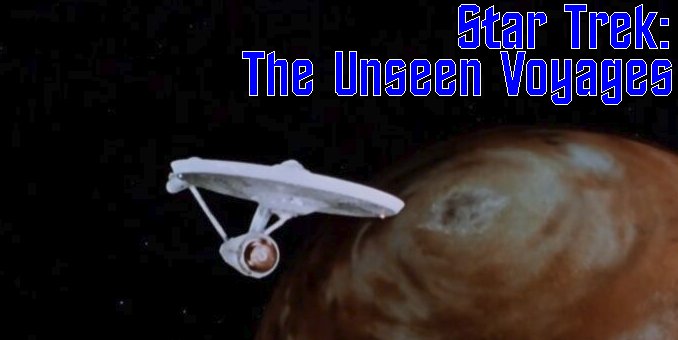
But despite this wealth of adventures of the crews of the starship Enterprise that have been told, there are still others that have not. Stories and scripts that were developed for various iterations of the franchise that never got the final go-ahead to be put into production. Some were meant as episodes for the various TV series, some where meant as big screen adventures and some were meant to launch entirely new versions of the franchise. And, as we head towards the franchise’s sixtieth anniversary, we are going to take a look at many of them in this new series – Star Trek: The Unseen Voyages.
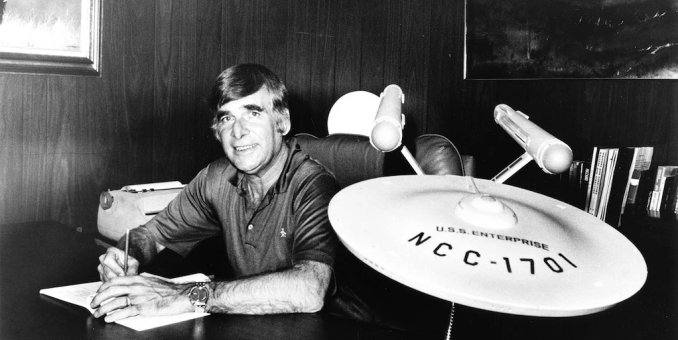
In our inaugural episode, we started a look at the very first ideas that Star Trek creator Gene Roddenberry put down on paper in his pitch to sell the show to a network. In addition to him describing the show’s setting, characters and dramatic intentions, the initial pitch also suggested a number of potential storylines for episodes, many of which never became actual episodes. In Part One we examined the first half of those initially suggested but abandoned loglines, and now we take a look at the second half.
The Loglines
A Matter Of Choice
Billed as “another entrapment story,” where Captain April and the crew of the Yorktown discover a planet where “the intelligent life has achieved no great material success but instead, has learned the power to live and relive over and over again in different ways, any portion of their past life they may choose.” Roddenberry frames it as an adventure that would focus on April, offering him “the chance to do those certain things all over again.”
A fascinating logline, because who wouldn’t want to relive a strong, happy romantic relationship or a lazy summer from their youth? And therein lies the idea of being trapped in one’s nostalgia, never moving forward in life with the lessons learned from those previous moments. But there is another possible trap here as well – the chance to relive a past event and try to change the outcome. Does that great romance of the past end badly, and reliving it leads to someone trying to change whatever happened that led to the breakup? Some interesting possibilities can grow out of this seed of a story.
The Radiant One
A crewmember of the Yorktown falls in love with “an angelic female on a ‘Garden of Eden’ planet.” However, due to her alien biology, “her chemistry includes radium in lethal quantity,” giving the crewmember anywhere from “six weeks to six months” to live. Another interesting premise, and when you realize that this overall pitch document was written just less than two months after the US Surgeon General released their report on the dangers of smoking, it is hard not to see a parallel. And it was most likely intended, as Roddenberry would establish that there is no smoking in the 23rd century world of Star Trek. Of course, since Roddenberry received pushback from the network over that decision in just the abstract, it seems unlikely that they would have allowed a story that could be seen as an anti-smoking metaphor to go forward.
The Trader
The Yorktown arrives at the planet Satunii, “a planet of incredible oriental splendor mercilessly ruled as emperor by a space trader turned renegade.” The logline’s only hint of an actual plot is likening the episode to “a visit to the court of Genghis Khan.” Again, not much of a story here, so we can only speculate on what kind of episode could have grown out of it. Was the space trader forcing his “subjects” into slavery? Were they dealing with outlawed goods like narcotics? Could it have been a story about the Federation’s Prime Directive – No interaction with civilizations who haven’t achieved warp drive-like technology – once that concept had been added into the show’s creative mix? An allegory about colonialism or capitalism? There’s a lot of potentiality without the specificity, which makes it a good logline for a pitch document like this.
A Question Of Cannibalism
When they arrive at an Earth colony on the planet Regulus, Captain April and his crew discover that “the cow-like creatures raised on the ranches there are actually intelligent beings.” The colonists however, are not about to let the crew of the Yorktown free what they consider their “cattle” and the basis for which they have built a part of their economy on.
While not himself a vegetarian, Roddenberry has expressed the belief that in the future humanity will have moved past live cattle farming to more ethically synthetic meat. And this logline certainly seems to endorse that idea. As such, it falls into Roddenberry’s desire to use the genre of science-fiction to tell stories that reflect on then current social conditions. Given that vegetarianism was seen as a part of the growing 1960s counterculture movement, it would have been a sneaky way to broach the topic in the living rooms of average Americans.
Funnily enough, British science-fiction author Douglas Adams would arrive at a similar concept in the “Dish of the Day,” a sentient cow-like creature who doesn’t mind that they were raised to be consumed by patrons of Milliways, the Restaurant at the End of the Universe, in the first season of his radio series The Hitchhiker’s Guide To The Galaxy, and its various adaptations into other media.
The Mirror
While in deep space, the Yorktown encounters an exact copy of itself “manned by exactly the same crew” but “on an exact opposite course.” The logline asks the question “Could you face yourself after discovering survival depends on killing yourself?” While the title here recalls the second season episode “Mirror, Mirror,” this logline seems to have nothing to do with alternate universes and evil doppelgangers. Or does it? This feels like a catchy story hook that Roddenberry came up with, intending to actually figure out the mechanics of the story should he actually need to.
Torx
This story would feature the series’ “first major menace to Earth.” In it, the crew of the Yorktown would encounter “an alien intelligence, claiming to be pure thought and no body, which ‘devours’ intelligence, leaving behind a helpless idiot.” The being has been “near starvation for eons,” and could pose a threat should it learn of Earth. An interesting premise that involves a trope that the actual show and eventually the franchise will deal with again and again – a discorporal entity and what that could mean. The logline also raises a philosophical question similar to “A Question Of Cannibalism” above. But here it flips the idea, making humans the “food” in this case. Whereas that storyline could have served to potentially discuss vegetarianism, this suggest a them about the morality of killing an intelligent being that is only trying to survive.
The Pet Shop
Another story that at least starts off as a “Parallel Worlds” tale, this time on a planet that bares a resemblance to St. Louis in the mid1910s. The difference is that women are most definitely in charge, with men reduced to the level of pets – caged in kennels,kept as lap dogs, etc. Roddenberry notes that the story would be “something of a satire on ‘people and dogs,'” with men being treated in various ways similar to how people have various ways of treating their own pets. It certainly seems like this story could also lead to an episode that was either an endorsement or a critique of the growing 1960s feminist movement, depending on what direction the show wanted to take.
Kongo
If you thought that episodes about vegetarianism and feminism could have been controversial, they don’t hold a candle to “Kongo.” The Yorktown discovers yet another “Parallel World” planet, this time very similar to “the ‘Ole Plantation Days’ of the South.” However, on this world, race roles are reversed, with “white savages who are shipped in and auctioned at the slave mart.” Complications arise when part of the landing party is mistaken for runaway slaves and returned to the slave market to be sold.
Needless to say, this is a super provocative story idea, especially when the country is in the middle of the civil rights movement. If Roddenberry would have attempted to go ahead with this one it seems almost inevitable that the network would shut it down almost immediately over fears of pushback from their southern affiliates. (ABC faced similar issues when it was getting ready to launch its twelve-hour miniseries Roots in 1977, but was able to convince southern stations to carry the series.)
The Venus Planet
The Yorktown arrives at a planet where “the social evolution process… centered on love.” The crewmen quickly discover that the “incredibly beautiful women” of the planet are skilled in “the ultimate in amorous wish-fulfillment.’ That is “until they begin to wonder what happened to all the men there.” Definitely an intriguing, if somewhat salacious, premise, though one in which the network would have a lot of say in how it is executed. Still, sexual cannibalism can be found in nature in insects like the praying mantis, though it stretches credulity that it would extend into otherwise sentient beings.
Infection
The final logline in the original pitch document imagines a story that does sound very familiar. A pregnant crewmember discovers that what she thought was her baby is actually an alien creature, implanted in “her body like some insects plant their eggs in other living insects.”
It is hard not think about the original Alien film from Ridley Scott when reading this logline, as it sounds very similar to how we see a facehugger implant a larval xenomorph into John Hurt, only for it to emerge rather memorably a few hours later during dinner. Presumably, the approach here would be far less graphic and probably focus on the medical staff’s attempt at removing the larva before it kills its host rather than on straight up body horror. It could conceivably also serve as an allegory for abortion, a daring topic to try and broach on national television at the time.
While this doesn’t become an episode of the original Star Trek series, the idea of a crew member being impregnated is something that Roddenberry would return to a few times. The first was in the aborted sequel TV series Star Trek: Phase II (which we will be getting to in good order), and then again in Star Trek: The Next Generation.
Next Time: We jump forward to Star Trek‘s second season for the first of two scripts that were commissioned for the show but never produced.