
In this periodic feature, we take a look at a current rumor and apply some logic and knowledge about how journalism and the entertainment business work to separate fact from fandom fiction.
This past weekend saw the release of Coyote Vs Acme, a live-action/animation hybrid featuring Wile E Coyote’s legal problems with the Acme Corporation, that audiences almost never got to see. Although finished and scheduled for release in 2023, studio Warner Brothers decided to shelve the movie and take a tax write-off on its production rather than release the film. A loud hue and cry from film and animation fans, led Warners to try to find someone willing to buy the film and distribute it themselves. That savior turned out to be Ketchup Entertainment, who was met with one of the highest Rotten Tomatoes aggregate critics scores of the year, and second place at the weekend box office.
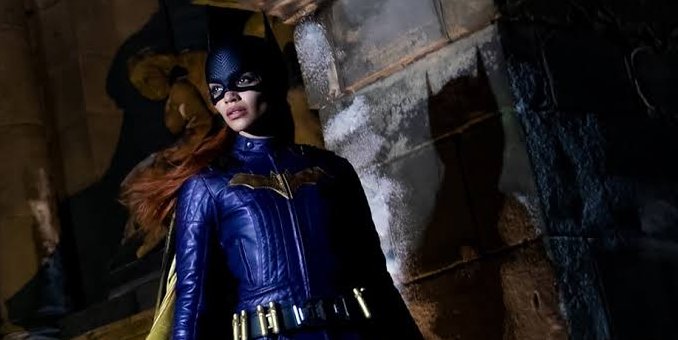
Coyote Vs Acme‘s release also brings to mind another high-profile Warner Brothers project that was shelved – Batgirl.The film would star Leslie Grace in the title roll, and see her teaming up with Michael Keaton’s Bruce Wayne/Batman, newly returned to the DC Extended Universe thanks to the events of the Flash motion picture, to take on the pyromaniac villain Firefly who was being played by Brendan Fraser.
Originally set as a project for their HBO Max streaming service, Warners shut the project down while it was in post-production. The reason given being that Batgirl was commissioned with the intention of being made available on the HBO Max streaming service. But between the project getting approved in 2021 and when it was shut down in August 2022, Warner Brothers was purchased by Discovery with Discovery chief David Zaslov taking charge of the venerable studio. Zaslav’s intent with the combination of the two media companies was to use their combined cash flow could more aggressively pay down their combined debt loads.
Part of Warners debt stemmed from heavy investment into their streaming service. But with the economics of streaming shifting, one of the first thing that Zaslav did was remove a number of films and television series that had been specifically created as HBO Max exclusives reportedly based on an analysis that suggested these projects were not attracting new subscribers. As there was still some royalty obligations attached to these films and series, the studio effectively wiped millions of dollars in recurring residual obligations off their books.
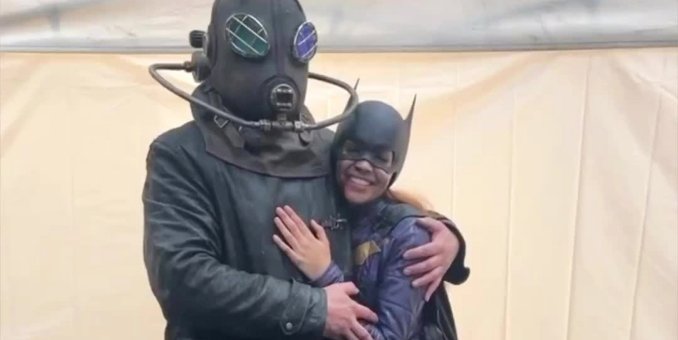
Unfortunately, criticisms and protests from public media were not enough to change the studio’s mind on the shelving of Batgirl. To this date, the film remains unseen by the public outside of a few pieces of behind-the-scenes footage. That inaccessibility has led to a conception that reason that the film was shelved because it wasn’t good.
But the idea that Batgirl was just too bad to be released is one that is unsubstantiated by facts and common sense reasoning about how the film post-production process works.
“They Wouldn’t Shelve It If It Wasn’t Bad”
Some pundits like to argue that if the Batgirl movie wasn’t bad but actually had been good, the studio surely would have released it. Putting aside the circular logic of that statement for a moment, Warner Brothers, along with every other studio, has released bad films in the past. Just this year, the half the films released by the studio fell below the 60% critic consensus threshold for the review aggregator Rotten Tomatoes to rank a film as “Fresh.” Ironically, the Warner Brothers-abandoned Coyote Vs Acme currently has a 96% on Rotten Tomatoes, 32 points higher than Warners’s highest ranking film (Mortal Kombat II) this year so far.
Nobody sets out to make a bad film. But when they do, the studios don’t just trash them and the enormous amount of money that they invested in the production and just start over. Studios put out bad films all the time, in the hope that the marketing will overpower any critical word on the film and drive people to theaters in large enough numbers to cushion any financial loss. Sometimes that works, sometimes it doesn’t.
Also, just assuming Batgirl is bad is an assumption made without context. Do the directors, Adil El Arbi and Bilall Fallah, have a track record of bad films? Not really. The directing pair’s film previous to Batgirl, Gangsta, does not have a critics score on Rotten Tomatoes, but does hold an 82 audience score. After Batgirl fell apart, the pair went on to direct the third and fourth installments of the Bad Boys franchise, with their contributions rating significantly higher than the first two films. While it is possible that maybe they were just having a bad time with Batgirl, the duo’s overall track record suggests otherwise..
“It’s Bad” Is The Spin
In an interview with Coyote Vs Acme producer Chris DeFaria before the release of the nearly shelved film, DeFaria stated he knew that, despite some very good test screening scores, the studio would try to pain the film as not being good enough to release and knew that he had to counter that impression immediately.
We wanted to make sure that it was never viewed as a failure, that it wasn’t being shelved because it was a bad movie. That was something I knew people who canceled the movie were going to start to put out there.
DeFaria was right to be concerned that the studio was going to spin the shelving of Coyote Vs Acme as a film quality issue. Puck reporter Matt Belloni stated on his podcast The Town that Warners was indeed trying to spread the word that the studio was cancelling the release of all these films over quality concerns.
The David Zaslav team, when they came in there [Warner Brothers], they were quietly whispering that these movies that they kill like Batgirl, and the Scooby Doo movie [Scoob: Holiday Haunt], and Coyote Vs Acme, they were actually pretty bad and we were embarrassed by them. And then [Coyote Vs Acme] comes out and has a ten times better score than most of the Warner Brothers movies this year.
Any statement about the quality of Batgirl, Scoob: Holiday Haunt or any of the other films that the studio was disappearing for the sake of a few bucks should probably be taken with a rather large-sized grain of salt.
To be fair, in an August 2023 interview with the French outlet SKRIPT (and relayed via Entertainment Weekly), Batgirl co-directors Adil El Arbi did state that Warners told him and partner Bilall Fallah that the quality of the film was not a reason for its cancellation. “The guys from Warners told us it was not a talent problem from our part or the actress, or even the quality of the movie,” El Arbi said. Though that could just be the unnamed executive trying to sooth over any upset feelings before the studio’s whisper campaign got under way.
You Can’t Judge What Isn’t Finished
If film history has taught us anything, it is that a film can be saved in the editing process. Perhaps the most famous example of this would be Star Wars. Director George Lucas screened a rough cut of the film to a small group of people including his film school friends Brian DePalma and Steven Spielberg. The consensus was the film a confusing mess and it definitely needed work. Lucas’s wife Marcia Lucas, who worked as a film editor, than pretty much went on to salvage the film by restructuring its climactic space battle over the Death Star into the form we know today among other changes and fixes.Her work on Star Wars is an important and foundational lesson about not just editing but about the filmmaking process as a whole.
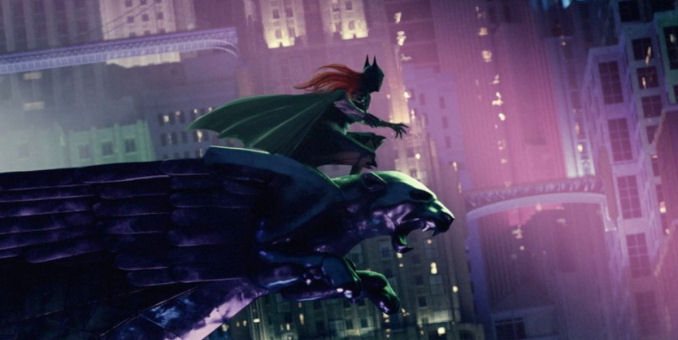
When Warner Brothers pulled the plug on Batgirl, it was not a finished film. Arbi and Fallah were only mid-way through the editing process. The film still had previously scheduled reshoot/pick-up days ahead. Reshoot days designed to get any coverage to help improve the film if and where needed. If there were any issues with how the film was starting to come together – and there is no actual evidence that has been introduced arguing one or another – it seems likely that they could be addressed as the post-production process continued.


